It’s impossible to imagine modern automation without PLCs. From factory assembly lines to power plants, these compact controllers manage every signal, sensor, and process with precision.
Coordinating complex machinery manually is slow, error-prone, and risky, leading to production delays, safety hazards, and costly mistakes. A Programmable Logic Controller (PLC) doesn’t just automate tasks—it ensures machines operate safely, efficiently, and in perfect sequence.
In this blog, you will learn what a PLC control system is, its types, applications, and how it works.
TL;DR
What Is a Programmable Logic Controller?
A PLC (Programmable Logic Controller) is an industrial digital computer that monitors inputs from sensors, executes control logic programs, and manages outputs to actuators to automate machines, processes, and systems in manufacturing, energy, and building management.
Key Components of PLC System
The key components of a PLC system are as follows:
- CPU: Processes the program and controls operations.
- Memory: Stores instructions, programs, and data.
- I/O Modules: Connect the PLC to sensors, machines, and devices.
- Power Supply: Provides the required electrical power to the PLC components.
- Programming Device: Used to write, upload, and modify control logic.
- Rack/Chassis (optional): Holds modules together and allows easy expansion.
What is a Relay Logic System?
PLCs are the successors of relay logic systems, which are industrial control setups that use relays, switches, timers, and actuators to operate machinery. In relay logic systems, relays perform logic functions by energizing or de-energizing electromagnetic coils, allowing control over motors and other devices.
Relays can connect circuits with different voltages and currents, coordinating multiple automation devices. However, these systems are hard-wired and complex to maintain due to extensive wiring. PLCs replaced relay logic by enabling programmable, digital, and easily modifiable control of industrial processes.
History of PLC Control System
The first Programmable Logic Controller (PLC) was designed and developed by Modicon as a relay replacer for GM and Landis; Model 084 was invented by Dick Morley in 1969.
- 1973: First commercially successful PLC, Model 184, designed by Michael Greenberg, introduced to the industrial market.
- 1970s–1980s: PLCs evolved into modular designs, supporting various input/output devices and complex logic operations.
- 1980s–1990s: Standardized programming languages (Ladder Logic, Function Block Diagrams) and networked PLCs introduced.
- 1990s–2000s: Integration with SCADA systems and remote monitoring expanded applications in process industries.
- 2010s–Present: PLCs support IoT, Industry 4.0, and AI-assisted automation, enabling real-time monitoring and predictive maintenance.
Learn more: The History of Programmable Logic Controllers
How does a PLC Controller work?
A PLC acts like the brain of an industrial system. It continuously monitors machines and sensors, makes decisions based on programmed logic, and controls outputs to manage operations. Its workflow can be broken into four key steps: gathering inputs, executing logic, controlling outputs, and performing system checks.
- Input Acquisition: The controller gathers signals from sensors, switches, meters, and operator interfaces. Inputs can be digital, representing on/off states, or analog, representing variables such as pressure, temperature, or speed. Operators can also provide inputs through HMIs, keypads, touchscreens, or SCADA systems.
- Logic Execution: The programmable controller evaluates incoming data using instructions stored in memory. These programs determine the state of outputs based on pre-defined logic. Logic can range from simple sequences resembling relay operations to advanced control strategies implemented with ladder logic, function blocks, or structured text.
- Output Activation: Once the logic is executed, the automation controller commands devices such as motors, valves, heaters, solenoids, alarms, and indicator lights. Some devices can act as both inputs and outputs—for instance, a valve position sensor can provide input feedback while controlling the valve position as output.
- Diagnostics & Communication: After executing the program, the PLC performs internal checks and monitors system health. It communicates with supervisory systems, HMIs, and other controllers using protocols like Ethernet TCP/IP, Modbus, Profinet, RS-232, USB, or Bluetooth, allowing real-time monitoring and integration into industrial networks.
Modular design sets PLC controllers apart. A typical system includes a CPU, I/O modules, power supply, and programming interface. Input/output modules can be customized for specific applications, and the CPU alternates between programming and run modes to implement automation logic. These controllers also track runtime data, control processes in real-time, trigger alarms, and optimize production lines, making them versatile across manufacturing, assembly, and process automation environments.
What are the types of PLCs?
The two main types of PLCs are compact (fixed), & modular, each suited for different industrial control needs.
- Compact (Fixed) PLC: Compact PLCs have the CPU, memory, and input/output (I/O) modules built into a single unit. They are simple to set up, affordable, and work well for small-scale or standalone automation tasks with fewer I/O points. The downside is that upgrades or repairs can be tricky, which may cause downtime if there isn’t a backup unit.
- Modular PLC: Modular PLCs use separate, replaceable modules for the CPU, power supply, and I/O. This makes it easy to expand or customize the system for bigger or more complex operations. If one module fails, it can be swapped out without shutting down the entire system, thereby reducing downtime and maintaining smooth process operation.
Benefits of Using Programmable Controller
PLCs offer multiple advantages for industrial automation:
- Ease of Programming: PLCs use intuitive programming languages, reducing complexity and training costs.
- Proven Technology: Decades of industrial use provide extensive research, tutorials, and reliability data.
- Cost-Effective: Available in a wide range of models, including affordable options for small businesses.
- Versatility: Suitable for controlling a variety of machines, processes, and industrial systems.
- Durability: Solid-state design with no moving parts ensures high reliability in harsh conditions.
- Simplified Maintenance: Fewer components make troubleshooting faster and reduce downtime.
- Energy Efficiency: Low power consumption helps save energy and eases wiring requirements.
- Scalable: Can be expanded with additional I/O modules for growing operations.
- Integration Friendly: Easily connects with HMIs, SCADA systems, and other industrial networks.
Read more: Can PLC run without SCADA?
What Are the 5 Standard PLC Programming Languages?
PLCs are widely used in industries because they are fast, easy to operate, and simple to program. The standard PLC programming languages include:
- Ladder Diagram (LD): Graphical representation resembling electrical relay logic.
- Function Block Diagram (FBD): Uses blocks to represent functions and data flow.
- Structured Text (ST): High-level text-based language for complex operations.
- Sequential Function Chart (SFC): Defines steps and transitions for sequential processes.
- Instruction List (IL): Low-level assembly-like programming language.
Where are PLCs used?
PLCs are widely applied across both daily life and industrial operations, controlling processes with precision and efficiency.
In Industrial Manufacturing:
PLCs are essential for modern industrial automation, optimizing production, saving labor, and ensuring quality:
- Machine Industry: Controls machines, motors, and production line functions for consistent output.
- Packaging Industry: Automates packaging lines, sorting, and labeling processes.
- Water Segment: Manages pumps, valves, and treatment processes efficiently.
- Plastic Industry: Oversees molding machines, extrusion lines, and quality control sensors.
- Pharma Industry: Ensures precise dosing, packaging, and monitoring in drug manufacturing.
- Process Industry: Controls continuous operations, such as chemical processing, food production, and material handling.
In Everyday Life:
PLCs power many systems we encounter without noticing:
- Street Lighting: Automates energy-efficient lighting using timers, light sensors, and pedestrian/vehicle detection, reducing costs by up to 70%.
- Traffic Management: Controls traffic lights and digital signage for safer and smoother urban mobility.
- Vehicles: Manages electric windshield wipers, fuel injection pumps, and other automated car functions.
- Buildings: Operates automatic gates, elevators, escalators, shutters, and heating systems.
How to Choose the Right Programmable Controller?
To choose the right programmable controller you need to assess key factors to ensure the PLC controller fits your automation needs:
- Power Supply: Determine whether the system requires AC or DC voltage.
- Memory: Check if the controller has sufficient ROM and RAM to run your programs efficiently.
- Processing Speed: Ensure the CPU can handle your application’s operational demands.
- Compatibility: Confirm the controller works with existing hardware, power supplies, and mounting systems.
- Input/Output Capacity: Verify the number and type of I/O points, including both analog and discrete signals.
- Connectivity: Consider network options and communication protocols for integration with HMIs or SCADA systems.
- Environmental Tolerance: Make sure the controller can safely operate in your facility’s temperature and conditions.
Role of PLC in SCADA and HMI Systems
PLCs serve as the central link between industrial devices and control interfaces like SCADA and HMI systems. They collect data from machines, sensors, and actuators, then relay that information to the SCADA or HMI for monitoring and visualization.
Key roles of a PLC controller in these systems include:
- Data Acquisition: Gathering real-time information from sensors, motors, and other devices on the plant floor.
- Control Execution: Sending signals to actuators, valves, and drives to regulate industrial processes.
- Communication: Acting as the bridge between field devices and higher-level control software.
- Process Monitoring: Enabling operators to track performance, detect faults, and make informed decisions.
PLC vs Relay Control System
| Feature | PLC | Relay Control |
|---|---|---|
| Flexibility | Easy to reprogram | Hard to change wiring |
| Space Required | Compact design | Requires large control panels |
| Maintenance | Simple diagnostics | Faults are hard to find |
| Cost | High initial cost, low long-term cost | Low initial cost, high maintenance cost |
| Speed | Very fast operation | Slower operation |
What Is the Future of PLCs?
PLCs will continue driving industrial automation through IoT integration, smart control, and predictive maintenance. New technologies like Programmable Automation Controllers (PACs) and industrial embedded hardware expand functionality, while software like Ignition enhances monitoring, data collection, and process efficiency.
Despite innovations, PLCs remain popular for their simplicity, reliability, and affordability, maintaining a key role in Industry 4.0 manufacturing and operations.
Why Choose GIC Programmable Logic Controllers?
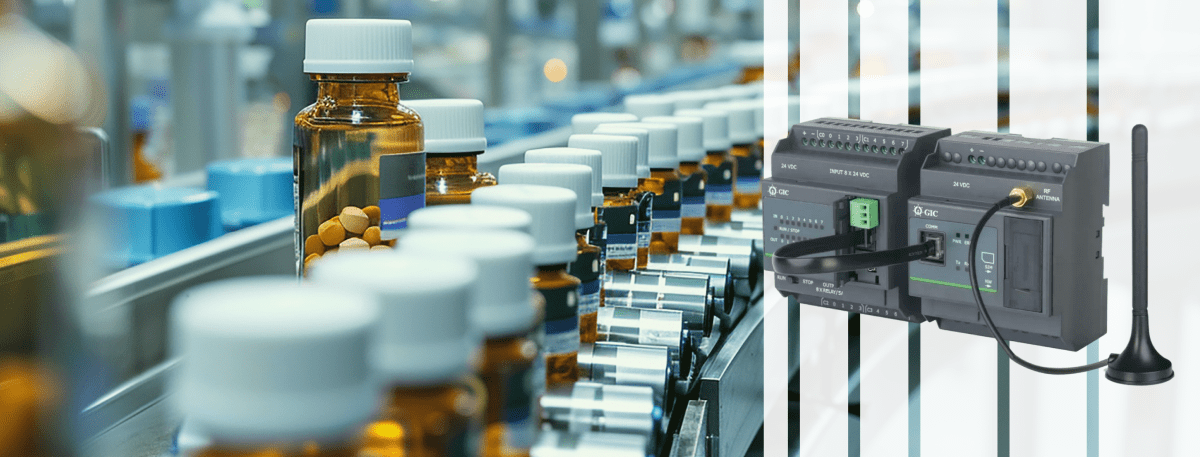
GIC PLCs provide reliable, flexible, and scalable solutions for industrial automation. Engineered to monitor inputs, execute logic, and control outputs, they deliver precise performance across manufacturing, infrastructure, agriculture, HVAC, utilities, and OEM applications.
Key Advantages:
- Enhanced Control: Fast processing and real-time logic execution ensure reliable outputs and safe operation.
- Easy Programming & Flexibility: User-friendly software and adaptable I/O configurations meet diverse process requirements.
- Reliability: Rugged design with surge protection, temperature resilience, and noise immunity suits harsh environments.
- Scalable: Expandable from standalone systems to multi-device setups using add-on modules.
- Compact Design: Space-saving form factor without compromising functionality.
- Seamless Integration: Works with GIC HMIs, relays, sensors, and other automation devices for plug-and-play compatibility.