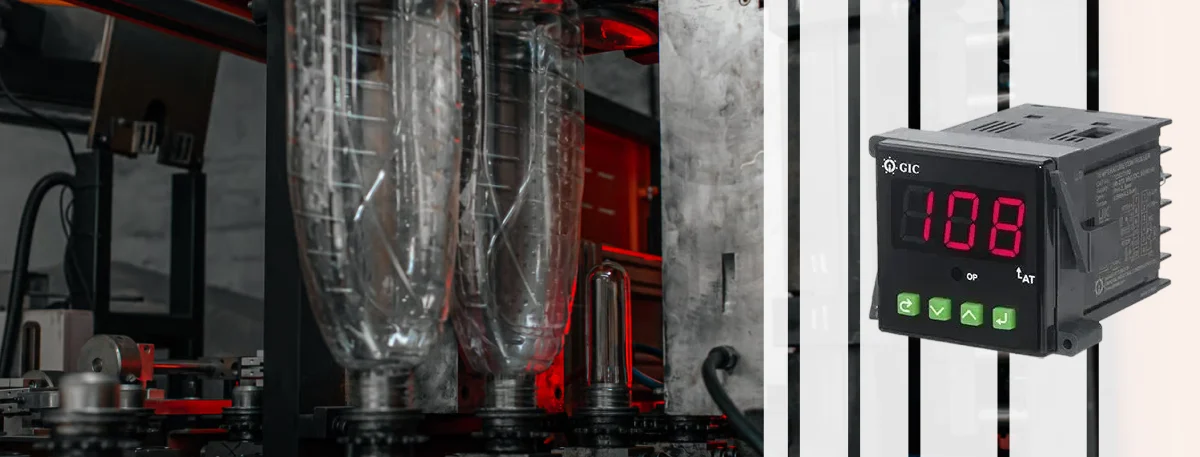
A temperature sensor is a device that detects temperature changes and converts them into an electrical signal for monitoring, measurement, and control.
Industries and homes rely on temperature sensors every day to measure and control temperature accurately. From maintaining safe conditions in industrial processes to regulating comfort in living spaces, these sensors play a key role in ensuring efficiency and reliability.
Different applications require different types of sensors, each designed to respond to temperature changes in a specific way. When connected to a temperature controller, they provide real-time data that helps maintain the desired conditions with precision.
In this blog, you will understand what a temperature sensor is, how it works, and why it is essential for both industrial and everyday applications.
TL;DR
- Temperature sensors detect thermal changes and convert them into electrical signals for monitoring, measurement, and process control.
- Different sensor types such as RTD, thermocouple, thermistor, infrared sensor, and pyrometer are used based on accuracy, temperature range, response speed, and application requirements.
- Temperature sensors play a critical role in industrial automation systems by improving process stability, thermal regulation, safety, and operational efficiency.
What is a temperature sensor?
A temperature sensor measures heat levels and converts thermal changes into an electrical signal that can be monitored, displayed, and processed by a control system.
The sensor continuously detects temperature variation and provides real time feedback to temperature controllers, PLC systems, and monitoring equipment for accurate thermal management.
What are the key functions of a temperature sensor?
- Temperature measurement: Continuously measures the actual process or environmental temperature.
- Signal conversion: Converts thermal changes into electrical signals such as resistance, voltage, or current.
- Feedback to the controller: Provides real time input to temperature controllers for process monitoring and regulation.
- Process control support: Helps the controller compare actual temperature with the setpoint and adjust the system accordingly.
- Safety and protection: Prevents overheating or overcooling by maintaining safe operating conditions.
- System stability: Supports stable operation by reducing thermal fluctuation in industrial systems.
What are the types of temperature sensors?
Temperature sensors are mainly classified into:
- contact temperature sensors
- non contact temperature sensors
Contact sensors measure temperature through direct physical contact, while non contact sensors measure emitted thermal radiation from a distance.
Contact temperature sensors
Contact temperature sensors measure temperature by being in physical contact with the object or medium. Heat transfer between the surface and the sensing element allows accurate and stable measurement.
RTD (Resistance Temperature Detector)
An RTD measures temperature based on the change in electrical resistance of a metal element. A controlled current flows through the element, and the resistance variation is measured and converted into temperature.
Platinum is commonly used due to its stable and predictable resistance characteristics. RTDs provide high accuracy, repeatability, and long-term stability, making them suitable for industrial temperature controllers.
Thermocouple
A thermocouple operates using the Seebeck effect, where two dissimilar metals generate a voltage when exposed to temperature. This voltage corresponds to the temperature difference between the measuring and reference junctions.
Thermocouple supports a wide temperature range and performs reliably in harsh environments. It is widely used in high-temperature industrial processes where a fast response is required.
Thermistor
A thermistor is a semiconductor-based temperature sensor whose resistance changes significantly with temperature. Most thermistors follow a negative temperature coefficient, where resistance decreases as temperature increases.
This sensor offers high sensitivity and fast response, making it suitable for applications that require the detection of small temperature variations within a limited range.
Semiconductor Temperature Sensor
A semiconductor temperature sensor uses integrated circuit technology to measure temperature based on the electrical behavior of semiconductor materials. The sensor produces an output signal such as voltage or digital data that changes proportionally with temperature.
Semiconductor sensor provides good accuracy, fast response, and easy integration with electronic systems. The usable temperature range is moderate, which makes it suitable for embedded systems and compact electronic applications.
Non Contact Temperature Sensors
Non contact temperature sensors measure temperature without physical contact. These sensors detect thermal radiation emitted by an object, making them suitable for moving, inaccessible, or extremely hot surfaces.
Infrared Temperature Sensor
An infrared sensor detects infrared radiation emitted by an object and converts it into a temperature reading. The measurement is based on the intensity of the emitted radiation.
Pyrometer
A pyrometer is a specialized non-contact sensor designed for high temperature measurement. It operates by measuring thermal radiation from hot objects.
A temperature sensor operates by detecting changes in temperature and converting those changes into an electrical signal that a temperature controller can process for regulation and control. This continuous feedback process enables stable and accurate temperature management in industrial systems.
- A change in temperature occurs within the process or environment
- The sensing element responds based on its material property
- In RTD systems, electrical resistance changes with temperature
- In thermocouple systems, a small voltage is generated due to temperature difference
- In thermistor systems, resistance changes sharply with temperature variation
- The physical change is converted into an electrical signal
- The signal is transmitted to the temperature controller
- The controller interprets the signal and converts it into an actual temperature value
- The measured value is compared with the setpoint
- Based on the difference, the controller adjusts output to heating or cooling devices
- The system maintains stable temperature through continuous feedback control.
Where are temperature sensors used?
Temperature sensors are widely used across industrial and commercial systems.
Common applications
- Industrial furnaces
- HVAC systems
- Food processing equipment
- Pharmaceutical manufacturing
- Semiconductor production
- Plastic molding systems
- Automotive systems
- Laboratory equipment
How do you choose the right temperature sensor?
Selecting the correct temperature sensor depends on several process requirements.
Important selection factors include:
- temperature range
- accuracy requirements
- response speed
- installation environment
- process complexity
- sensor durability
- industrial application type
Choosing the correct sensor improves measurement reliability, thermal stability, and overall process efficiency.
Read more: Common PID Temperature Controller Problems and Solutions