A Quick Guide to Key PLC Parts and How Each Component Works
Programmable Logic Controllers (PLCs) form the foundation of modern industrial automation. Industries such as manufacturing, energy, automotive, and food processing rely on PLC systems to control machinery, monitor processes, and ensure production consistency.
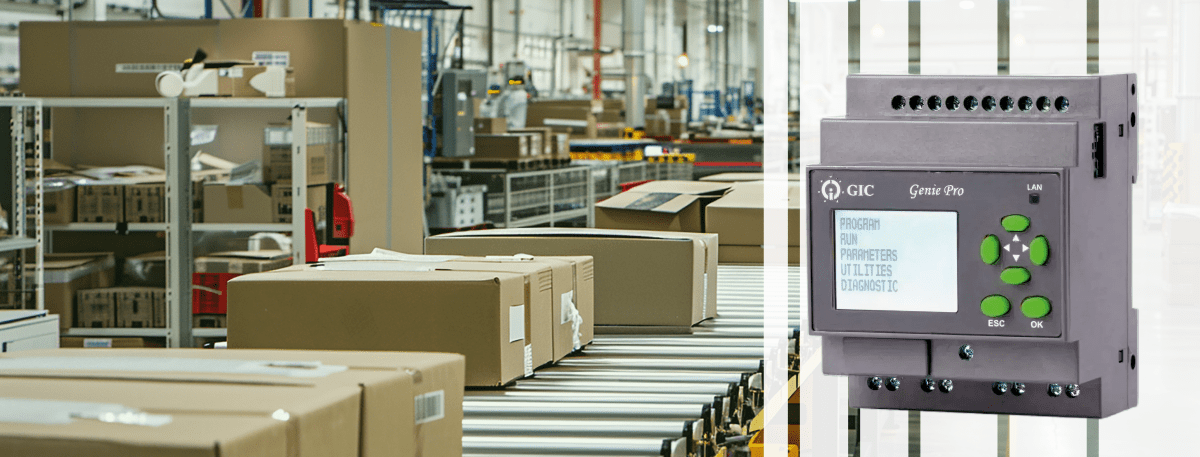
A PLC functions as an intelligent control unit that reads inputs from sensors, processes logic through its CPU, and sends output commands to actuators and machines. Understanding the key components of a PLC—such as the CPU, power supply, input and output modules, memory, and communication interfaces—helps engineers design efficient, reliable control systems.
In this guide, we explain each Programmable controller component in depth, showing how every unit contributes to precise, real-time industrial control.
TL;DR
What are the key Components of a PLC Control System?
A Programmable Logic Controller (PLC) consists of essential components that manage industrial automation tasks efficiently. These parts include:
- Power Supply – Converts incoming power to the required DC voltage for the PLC and its modules.
- Central Processing Unit (CPU) – Acts as the brain, executing control programs and processing input/output signals.
- Memory – Stores program instructions, data, and I/O statuses for real-time operations.
- Isolation Bus – Distributes power and communication across the PLC rack, protecting components.
- Network Interface – Allows connectivity for programming, monitoring, and communication with other devices.
- Input/Output (I/O) Cards – Connect external devices like sensors and actuators for signal processing.
- Programming Interfaces – Provide access for downloading and configuring control programs.
Read more: What Is a Programmable Logic Controller?
Hardware Components of a PLC
PLC hardware consists of:
- CPU
- I/O Modules
- Power Supply
- Memory Areas
- Input Relays
- Internal Utility Relays
- Counters & Timers
- Output Relays
- Data Storage Registers
Power Supply
The power supply converts incoming voltage into the levels required by the CPU, memory, and I/O modules. It often includes fuses for protection. In the United States, PLCs typically receive 120V AC at 60 Hz, while other regions may use 220V AC at 50 Hz. Many modern PLCs operate on 24V DC to ensure safety.
Checking voltage and maximum current requirements is crucial. Proper sizing guarantees that the PLC receives stable power, avoiding unexpected failures and ensuring the system can handle full-load conditions.
Central Processing Unit (CPU)
The CPU acts as the brain of the PLC, interpreting programs and controlling outputs based on inputs. It converts programs into binary machine code, sequences of 1s and 0s, to execute instructions.
Signals from inputs are processed according to program logic, and outputs are sent to field devices. The CPU monitors all I/O activity, making real-time decisions for industrial applications such as assembly lines, robotics, and chemical processing.
Input/Output Modules
Input Modules read signals from sensors, switches, and push buttons, capturing digital or analog data like temperature, flow, pressure, and speed.
Output Modules convert CPU commands into physical signals for actuators such as motors, solenoids, bulbs, and valves. Some modules handle analog signals, while others manage discrete ON/OFF commands.
Read more: What Are the Different Types of PLCs Used in Industry?
Memory
PLC memory stores both program instructions and operational data. Memory may reside within the CPU or on separate modules.
- Program Memory stores executable control programs.
- Data Memory tracks variables, constants, and I/O status.
Registers correlate each input and output to a memory location. Proper memory allocation is critical because it affects scan time, tag assignments, and overall control system performance.
Isolation Bus
The isolation bus distributes power from the supply to the CPU and I/O cards across the PLC rack. Cards share power through this backplane bus.
Engineers use fuses or circuit breakers to isolate and protect components. In some cases, repeater cards extend the bus to accommodate additional modules, ensuring consistent power delivery across different PLC cards.
Network Card and Programming Interface
PLCs include communication ports for programming and networking. Common interfaces:
- Ethernet/IP
- Profibus
- USB
- Wireless or IO-Link
These allow connection to HMIs, SCADA systems, and other PLCs, enabling real-time monitoring, remote control, and predictive maintenance.
Input Relays and Internal Utility Relays
Input Relays connect the PLC to external signals from devices such as sensors and switches. They typically use transistors rather than physical relays.
Internal Utility Relays do not exist physically. They simulate relay functions for tasks like initializing data at power-on, performing single-purpose operations, or maintaining internal logic without external connections.
Counters and Timers
Counters are virtual devices within the PLC used to count pulses, which may increment, decrement, or both. Some high-speed counters exist in hardware form for precise applications.
Timers operate in multiple modes: ON-delay, OFF-delay, retentive, and non-retentive. Timer increments range from 1 millisecond to 1 second, depending on application requirements.
Output Relays
Output relays connect the PLC to external actuators. They may be implemented as transistors, relays, or TRIACs, depending on the device being controlled. Output relays deliver ON/OFF signals to equipment like motors, solenoids, and indicators.
Data Storage and Registers
PLCs use registers to temporarily store math results, operational data, and backup information. These registers protect against data loss during power failures and help maintain system continuity.
PLC Software and Programming
PLC software varies by manufacturer. Popular PLC programming languages approaches include:
- Ladder Logic: Graphical, similar to relay logic, used for sequencing, timing, counting, and data manipulation.
- Function Blocks (FBD): Modular graphical blocks performing operations like math, logic, and control functions. FBD promotes reusability in complex systems.
- Structured Text (ST): Text-based programming, similar to Python or C, supporting loops, conditionals, and user-defined functions. ST suits developers experienced in software programming.
PLC Architecture Types
Industries utilize three main PLC architectures:
- Fixed PLCs – Compact, integrated units with non-expandable I/O.
- Modular PLCs – Expandable racks with customizable I/O and power modules.
- Distributed PLCs – Remote I/O and CPUs connected via networks, ideal for large-scale automation.
How PLC Programming Languages Operate
PLC programming languages control the behavior of a Programmable Logic Controller through a repetitive operating cycle called the scan cycle. The CPU executes this cycle continuously to process inputs, evaluate logic, and update outputs.
The scan cycle includes four primary steps:
- Reading Inputs: The PLC captures the current states of all physical inputs and stores them in the input image table.
- Logic Evaluation: The program logic is processed sequentially, updating memory registers and the output image table. In ladder logic, for example, each rung is evaluated from left to right, top to bottom.
- Writing Outputs: The results from the output image table are sent to the physical outputs, activating or deactivating actuators.
- Housekeeping: The PLC performs internal maintenance tasks, including fault checks, timer and counter updates, and communication servicing.
Scan times vary depending on program complexity, the number of instructions, and processor speed. Short programs may complete a scan in 3–5 milliseconds, while longer or more complex routines can take 60–70 milliseconds. Delays beyond this range may cause noticeable lag in actuator response, indicating the need for a faster processor or multiple CPUs.
Conclusion
A PLC combines hardware—CPU, power supply, memory, I/O modules, relays, timers, counters, and network interfaces—with software logic to monitor, control, and automate industrial processes. Understanding these components ensures efficient, reliable, and precise operations in machinery and automation systems.