
An Electronic Timer is a versatile control device designed to manage time-based operations in electrical and automation systems. It allows users to program precise delays, intervals, and cycles, ensuring processes run efficiently and consistently. Electronic timers are widely used in industrial automation, HVAC systems, lighting control, pumping systems, and machinery sequencing, offering reliability, accuracy, and ease of integration.
Supply Voltage +
Mode +
Mounting +
Relay +
No. Of Programs +
Display +
Power Reserve +
Clock Accuracy +
Pre-Programmed +
Accessories +
Product visibility +
Analog Input +
Base/Ext +
Bazel type +
Center Distance +
Clock +
Control Action +
Display with & without +
Input/Output +
No. of digits +
No. of set points +
Output +
Output 1 +
Output 2 +
Output 3 +
Product Type +
Read Out +
Register +
RS485 Communication +
Sensor Input +
Size +
Termination +
Contact +
Delay +
Enclosure Design +
Function +
Input Voltage +
Output Current +
Output Voltage +
Power +
Relay Output +
Supply +
Timing Range +
Variant +
Alarm Output +
Analog Output +
Auto Reset time +
Auxiliary Supply +
CBCT Size +
Colour +
Current Range +
Digital Display +
Digital Input +
Digital Output +
Display Colour +
High Speed Inputs +
Input Signal +
LCD Display +
Leakage Current +
Module +
Neutral Loss +
Output Signal +
Over Frequency +
Over Voltage +
Phase Asymmetry +
Phase Loss +
Phase Sequence +
Reset +
Sensor Supply +
Series +
Settable Off Delay +
Settable On Delay +
System +
Transistor Output +
Under Frequency +
Under Voltage +
Voltage +
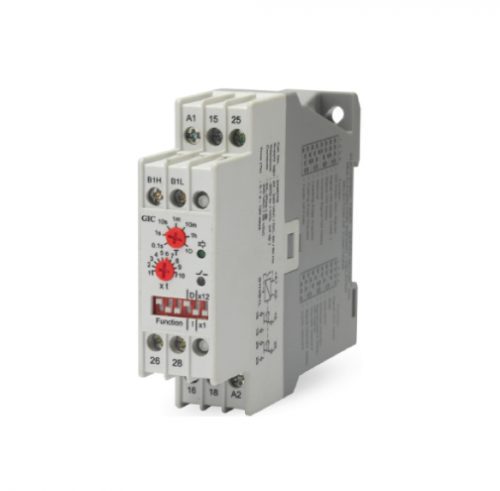
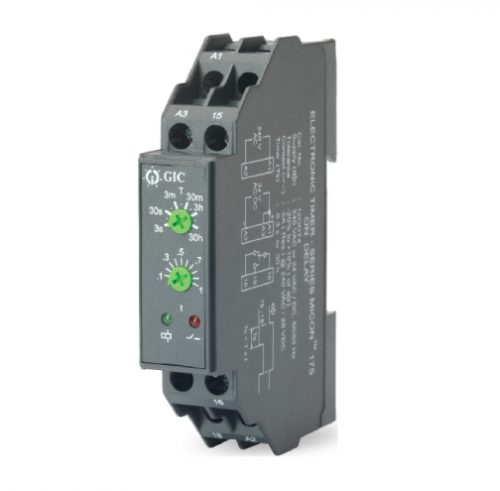
Featured GIC Electronic Timer Products
- Multi-Function Timer MF-100 – Flexible timer supporting multiple modes like ON-delay, OFF-delay, interval, and cyclic operations.
- Star-Delta Timer SD-200 – A specialized timer designed for motor starting applications, featuring adjustable transition delay.
- Digital Timer DT-300 – High-precision digital timer with display for advanced control needs.
- Accessories – Sockets, mounting kits, and protective covers for easy installation and extended durability.
Key Benefits of Electronic Timers
Precise Time Control
Electronic timers provide accurate switching at defined intervals, ensuring consistent performance across applications.
Improved Process Efficiency
By automating start/stop sequences and reducing manual intervention, timers help optimize system efficiency and reduce human error.
Wide Application Flexibility
From motor control to lighting and HVAC automation, timers adapt to a broad range of industrial and commercial uses.
Easy Installation & Operation
Compact designs, DIN-rail mounting, and user-friendly settings make GIC timers easy to install and configure.