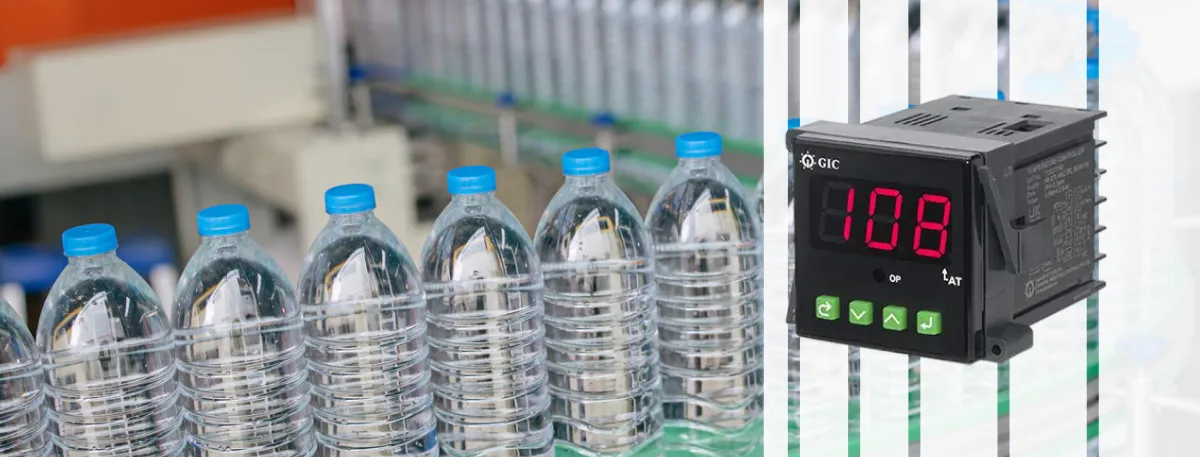
A single loop controller regulates one process variable using one feedback loop, while a multi loop controller regulates multiple process variables simultaneously using multiple independent feedback loops within one integrated control system.
Single loop controllers are used for simple thermal systems with one heating zone, while multi loop controllers are designed for advanced industrial applications that require coordinated control across multiple zones.
Choosing the right temperature controller affects process stability, thermal uniformity, energy efficiency, and production consistency. In systems such as furnaces, ovens, plastic molding machines, and heat treatment equipment, accurate temperature regulation is critical for maintaining product quality and operational efficiency.
In this blog, you will understand how both systems work and what sets them apart in industrial applications.
TL;DR
- Single loop controllers regulate one process variable in a single zone, while multi loop controllers manage multiple zones simultaneously within one integrated system.
- Single loop controllers are ideal for simple and independent thermal applications, whereas multi loop controllers are designed for complex industrial automation systems requiring coordinated control.
- Choosing the right controller improves process stability, thermal uniformity, operational efficiency, and overall production consistency.
What is a single loop controller?
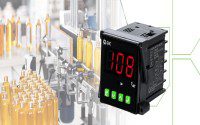
A single-loop controller is a basic process control system designed to regulate one process variable using one sensor input, one setpoint, and one output within a closed feedback loop.
When used in thermal applications, it functions as a temperature control system that manages one heating zone with precise feedback-based regulation.
Anatomy of a single loop controller
A single loop controller operates through a simple feedback architecture consisting of:
- One sensor input using RTD or thermocouple
- One process setpoint
- One control loop
- One output channel connected to a heater, SSR, or relay
- One display interface for process value monitoring
- Control parameters for response stabilization and error correction
Read more: Types of Temperature Controllers
How does a single loop controller work?
A single loop controller operates using a continuous closed loop feedback cycle. The sensor measures the process condition from one controlled zone and sends the signal to the controller. The controller compares the measured value with the programmed setpoint and calculates the deviation between the actual and desired condition.
Based on this deviation, the controller adjusts the output signal connected to the heating or cooling element. The system continuously repeats this cycle of:
- Measurement
- Comparison
- Correction
Applications of single loop controllers
Single loop controllers are commonly used in systems where one process variable requires independent control.
Common applications
- Single zone ovens
- Industrial furnaces
- Basic thermal processing systems
- Laboratory heating equipment
- Plastic molding machines with one heating section
- Small industrial heating systems
Advantages of single loop controllers
- Simple installation, configuration, and maintenance
- Lower initial cost for basic applications
- Easy tuning with minimal configuration
- Reliable performance for single zone thermal control
Limitations of single loop controllers
- Limited scalability for multiple zones
- No coordinated control between zones
- Increased panel space and wiring in large systems
What is a multi loop temperature controller?
A multi loop temperature controller is an advanced control system designed to regulate multiple temperature zones simultaneously using separate sensors, setpoints, and outputs within one integrated controller.
Each loop functions as an independent temperature control system while operating under a centralized control architecture.
Multi loop controllers are widely used in industrial automation systems that require coordinated thermal regulation across several heating zones.
Read more: Common PID Temperature Controller Problems and Solutions
Anatomy of a multi loop temperature controller
A multi loop controller is designed to manage several heating zones simultaneously using:
- Multiple RTD or thermocouple sensor inputs
- Individual setpoints for each control loop
- Separate output channels connected to heaters or SSRs
- Independent control logic for each zone
- Centralized processing architecture
- Multi value monitoring interface
- Coordinated thermal management capability
How does a multi loop controller work?
A multi loop controller continuously regulates multiple process zones in parallel.
Each loop receives sensor input from its assigned heating zone. The controller compares each measured value with its corresponding setpoint and calculates the deviation independently for every loop.
Based on these deviations, the controller generates separate output signals for each heating element or actuator.
All control loops operate simultaneously within the same system, enabling:
- Real time thermal regulation
- Coordinated heating control
- Stable multi zone operation
- Reduced temperature variation
In advanced systems, loops can also interact to maintain thermal balance across the entire process.
This improves:
- Thermal uniformity
- Process consistency
- Production stability
- Energy efficiency
Applications of multi loop temperature controllers
Multi loop controllers are used in industrial systems requiring simultaneous regulation of multiple heating zones.
Common applications
- Multi zone ovens
- Industrial furnaces
- Heat treatment systems
- Plastic extrusion and molding machines
- Drying and curing systems
- Semiconductor manufacturing
- Pharmaceutical processing systems
Advantages of multi loop controllers
- Centralized control of multiple temperature zones
- Improved thermal uniformity across the system
- Reduced panel space and wiring requirements
- Better scalability for complex automation systems
- Coordinated heating and stable thermal distribution
Limitations of multi loop controllers
- Higher configuration and tuning complexity
- Higher initial investment cost
- More complex troubleshooting and diagnostics
What is the difference between a single loop controller and a multi loop controller?
A single-loop controller is built to handle one process variable through one feedback loop, making it suitable for simple and direct temperature regulation in a single zone. A multi-loop controller is designed to manage multiple process variables using multiple feedback loops within one system, allowing simultaneous control of several temperature zones with either independent or coordinated operation.
| Feature | Single Loop Controller | Multi Loop Temperature Controller |
|---|---|---|
| Control Structure | One feedback loop | Multiple feedback loops |
| Number of Zones | One zone | Multiple zones |
| Sensor Input | One sensor | Multiple sensors |
| Output Control | One output channel | Multiple output channels |
| System Design | Simple and direct | Integrated and complex |
| Operation Style | Independent control | Independent or coordinated control |
| Configuration | Easy setup and tuning | Advanced configuration required |
| Monitoring | Single process value | Multiple process values |
| Performance | Stable for simple processes | High stability in complex systems |
| Cost | Lower initial cost and economical for simple applications | Higher initial cost but cost effective per loop in large systems |
| Best Use Case | Single zone thermal control | Multi zone thermal systems |
Conclusion
Single loop and multi loop controllers both play important roles in industrial temperature control, but they are designed for different process requirements.
Single loop controllers are ideal for simple single zone applications, while multi loop controllers provide coordinated control across multiple zones within one integrated system.
Choosing the right controller depends on the number of heating zones, process complexity, thermal uniformity requirements, automation needs, and operational efficiency goals. Understanding these differences helps industries select the most effective control system for stable and efficient process performance.