A temperature controller and a thermostat are both used for temperature regulation, but they operate very differently. A thermostat controls temperature using simple on and off switching, while a temperature controller continuously adjusts the output using feedback control for higher accuracy and stability.
Thermostats are commonly used in residential and basic commercial systems where maintaining a general temperature range is sufficient. Temperature controllers are designed for industrial automation systems that require precise thermal regulation, fast response time, and stable process control.
Choosing the right temperature control device is important because inaccurate temperature control can lead to process instability, inconsistent product quality, energy loss, and reduced operational efficiency.
In this blog, you will understand the difference between a temperature controller and a thermostat, how each works, and when to use them in industrial settings.
TL;DR
- A thermostat regulates temperature using simple on and off switching, while a temperature controller uses continuous feedback control for precise and stable thermal regulation.
- Temperature controllers are mainly used in industrial automation systems that require high accuracy, fast response time, and consistent process stability.
- Thermostats are suitable for residential and basic commercial applications where maintaining a general temperature range is sufficient.
What is a temperature controller?
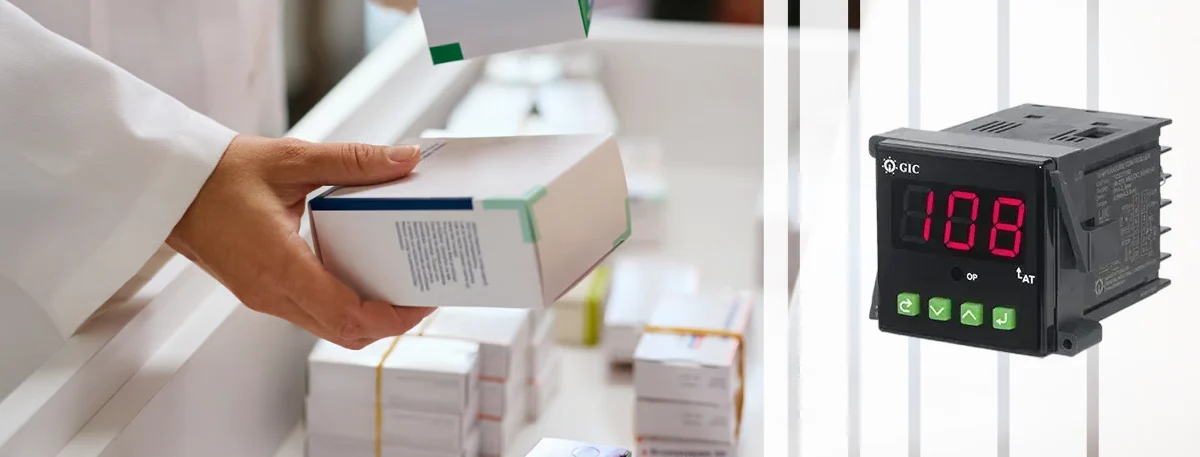
A temperature controller is a device that continuously monitors and regulates temperature by adjusting heating or cooling output in real time to maintain a precise setpoint. Temperature regulators are designed for industrial applications where high accuracy, stable feedback control, and continuous thermal regulation are critical.
Unlike basic switching systems, temperature control device use advanced control logic such as:
- On Off control
- Proportional control
- PI control
- PID control
Read more: Types of Temperature Controllers
How does a temperature controller work?
A temperature controller operates using a continuous feedback control loop.
The process works in the following stages:
- A sensor input such as an RTD or thermocouple measures the process variable.
- The controller compares the measured value with the programmed setpoint.
- The controller calculates the deviation or error.
- The output is adjusted in real time to regulate heating or cooling elements.
- The process repeats continuously to maintain thermal stability.
Applications of temperature controllers
Temperature controllers are widely used in industrial automation systems where precise thermal management is essential.
Common industrial applications
- Packaging Industry
- Furnace
- Plastic processing machines
- Pharmaceutical processing
- Food processing equipment
- Industrial Ovens & Dryers
Read more: Common PID Temperature Controller Problems and Solutions
What is a thermostat?
A thermostat is a basic temperature regulation device that controls heating or cooling systems using a simple on and off switching mechanism. Thermostats are commonly used in residential and light commercial systems where maintaining a general temperature range is sufficient.
Unlike temperature controllers, thermostats do not continuously adjust output or perform proportional feedback control.
Read more: History of Temperature Controllers
How does a thermostat work?
A thermostat operates using a simple switching mechanism.
The operating process includes:
- The thermostat senses environmental temperature.
- The measured temperature is compared with a preset threshold.
- If the temperature moves above or below the limit, the system switches on or off.
- The cycle repeats to maintain a basic temperature range.
Because the system reacts only after temperature crosses the threshold, noticeable thermal fluctuation can occur.
Applications of thermostats
Thermostats are mainly used in systems where high precision thermal regulation is not required.
Common thermostat applications
- Air conditioners
- Refrigerators
- Water heaters
- Residential heating systems
- Basic cooling systems
What is the difference between a temperature controller and a thermostat?
Temperature controllers and thermostats both regulate temperature, but they differ significantly in control method, stability, response speed, automation capability, and accuracy.
A temperature controller continuously adjusts output using feedback control to maintain stable process conditions. A thermostat simply switches systems on or off when temperature crosses a defined threshold.
Control Method
Thermostat: Operates using a simple on and off switching method. It turns the heating or cooling system on when the temperature drops below the set limit and turns it off once the desired level is reached. This creates a basic control cycle without continuous adjustment.
Temperature Controller: Uses continuous feedback control where the process temperature is constantly monitored and compared with the setpoint. The controller adjusts the output in real time, ensuring smooth and precise regulation without abrupt switching.
Accuracy
Thermostat: Provides moderate accuracy by maintaining temperature within a defined range. Small fluctuations are common because the system only reacts after crossing the set limit.
Temperature Controller: Offers high precision by continuously correcting deviations. It maintains the temperature very close to the setpoint, which is essential for processes that require tight control.
Response
Thermostat: Has a delayed response since it reacts only after the temperature exceeds or drops below the preset threshold. This can result in noticeable temperature swings.
Temperature Controller: Responds instantly to even minor changes in temperature. It continuously adjusts the output, preventing large deviations and maintaining consistent conditions.
Output Control
Thermostat: Provides fixed output through switching. The system is either fully on or completely off, which can lead to uneven heating or cooling cycles.
Temperature Controller: Delivers variable and proportional output based on the level of deviation from the setpoint. This allows gradual adjustments and smoother control of the system.
Sensor Compatibility
Thermostat: Typically uses simple built in sensors that are suitable for general temperature detection but may lack high accuracy.
Temperature Controller: Works with advanced sensors such as RTD and thermocouple, which provide accurate and reliable temperature measurement across a wide range of conditions.
Application Type
Thermostat: Commonly used in residential and light commercial systems such as air conditioners, heaters, and refrigerators where basic temperature regulation is sufficient.
Temperature Controller: Widely used in industrial processes such as ovens, furnaces, plastic processing, and heat treatment systems where precise and stable temperature control is critical.
Stability
Thermostat: Maintains temperature within a band but allows fluctuations due to its switching nature. This can lead to inconsistent conditions in sensitive applications.
Temperature Controller: Ensures highly stable operation by continuously adjusting the output. It minimizes fluctuations and maintains consistent process conditions.
Flexibility
Thermostat: Offers limited control options with fixed settings and minimal ability to customize performance.
Temperature Controller: Provides advanced features such as programmable setpoints, control parameters, and multiple modes, allowing it to adapt to different process requirements.
Cost
Thermostat: Has a lower initial cost due to its simple design and basic functionality, making it suitable for cost sensitive applications.
Temperature Controller: Involves a higher initial investment because of its advanced control capabilities, but it delivers better performance, efficiency, and long-term reliability in demanding applications.
| Feature | Temperature Controller | Thermostat |
|---|---|---|
| Control Method | Continuous feedback control | On and off switching |
| Accuracy | High precision | Moderate accuracy |
| Response | Real-time adjustment | Delayed response |
| Output Control | Variable and proportional | Fixed switching |
| Application Type | Industrial and complex systems | Residential and simple systems |
| Sensor Compatibility | RTD, thermocouple | Basic built-in sensor |
| Stability | Highly stable | Limited stability |
| Flexibility | Programmable and adjustable | Limited settings |
| Cost | Higher initial cost | Lower cost |
When should you use a thermostat or temperature controller?
Use a thermostat when:
- Basic temperature regulation is sufficient
- Precision control is not required
- Cost sensitivity is important
- The application is residential or low complexity
Use a temperature controller when:
- High precision thermal regulation is required
- Process stability is critical
- Industrial automation integration is needed
- The system requires programmable control
- Product quality depends on stable temperature conditions