Introduction
Wind turbine blades are manufactured and repaired using fiber-reinforced composites (glass fiber + epoxy resin). The curing of epoxy is a critical process that defines the blade's structural strength, durability, and fatigue resistance.
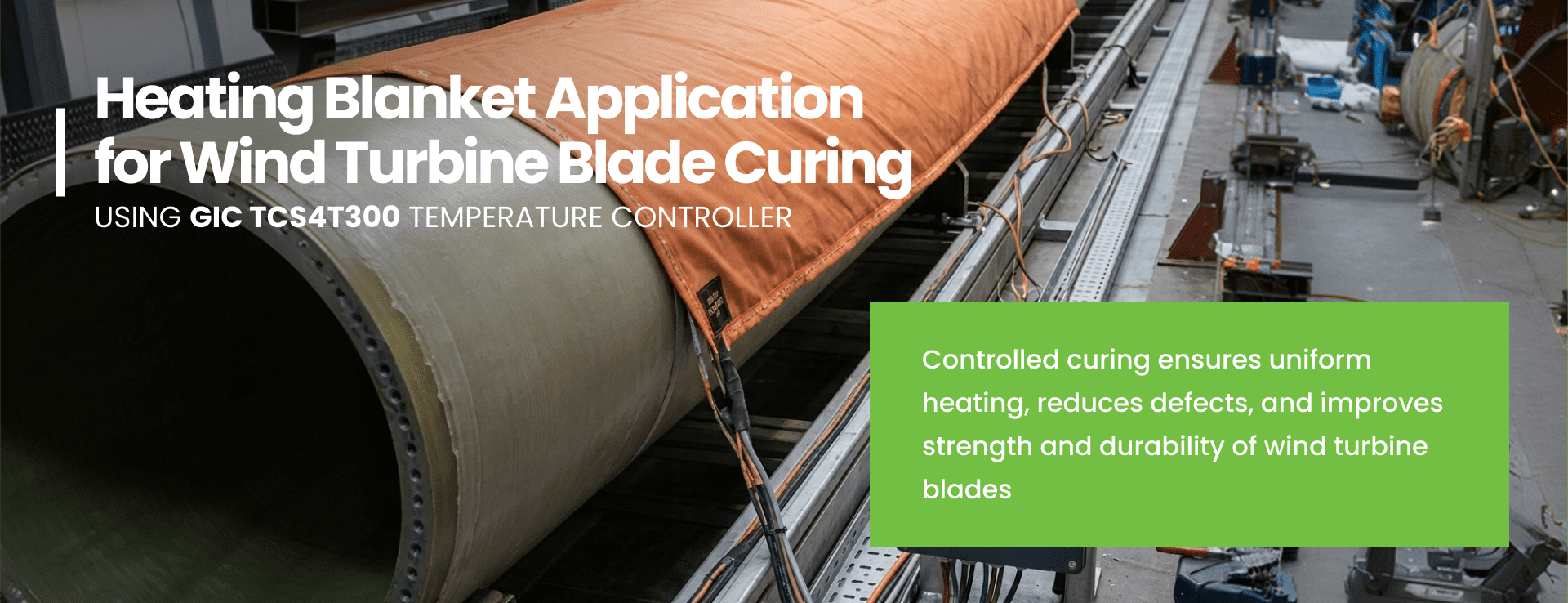
Due to the large size of blades and on-site repair requirements, conventional ovens or kilns are not practical. Hence, heating blankets are used to provide localized and uniform heating for curing.
- Epoxy requires controlled heat for proper curing
- Low temperature → incomplete curing
- Excess heat → defects like bubbles and deformation
Heating blankets ensure even heat distribution, enabling proper curing even in outdoor or cold environments.
Challenges
Solution
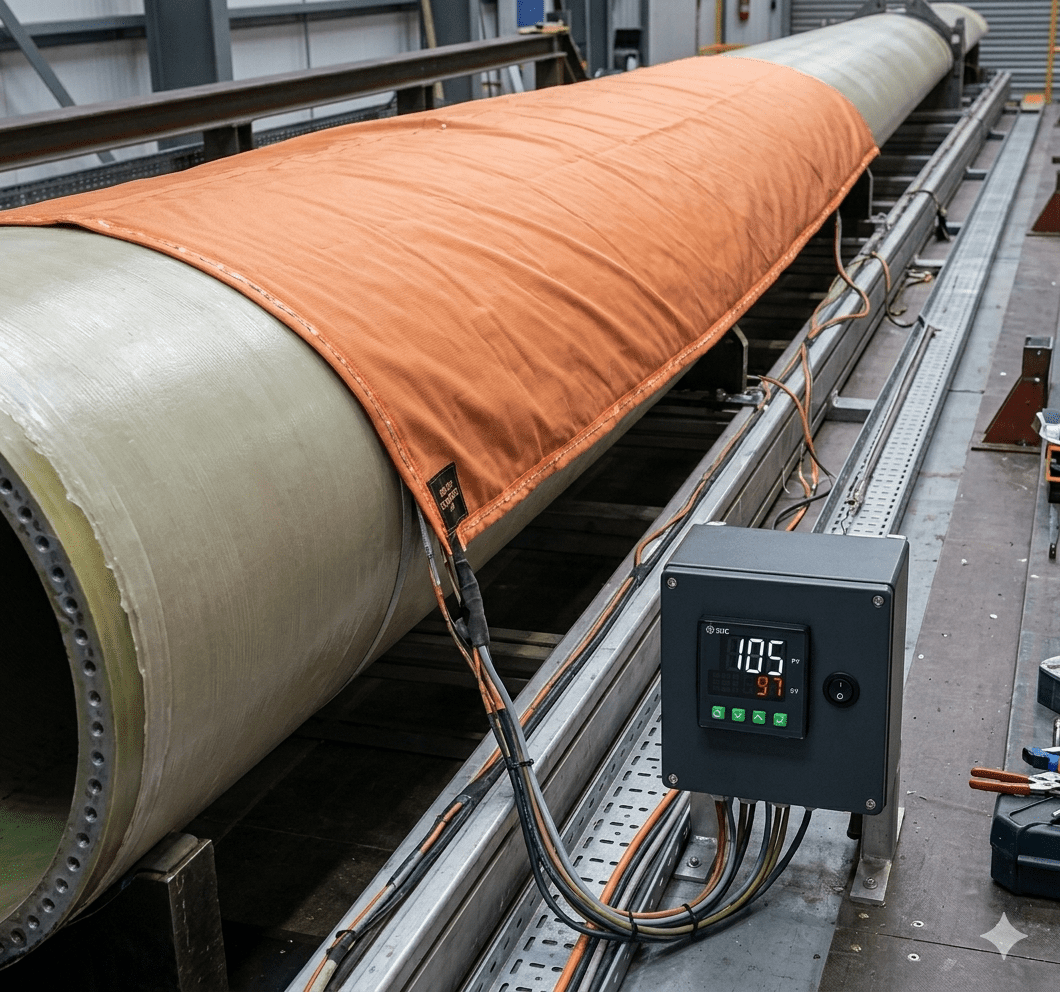
The GIC TCS4T300 temperature controller integrated with heating blankets provides a precise, stable, and reliable curing solution.
Conclusion
The combination of heating blankets and GIC TCS4T300 temperature controller ensures:
- Uniform and controlled curing.
- Improved bonding strength and durability.
- Reduced defects and rework.