Introduction
In industrial applications, compressors require high power during startup. When a motor starts, it can draw 5–6 times higher current than normal because there is no back EMF initially to oppose the supply.
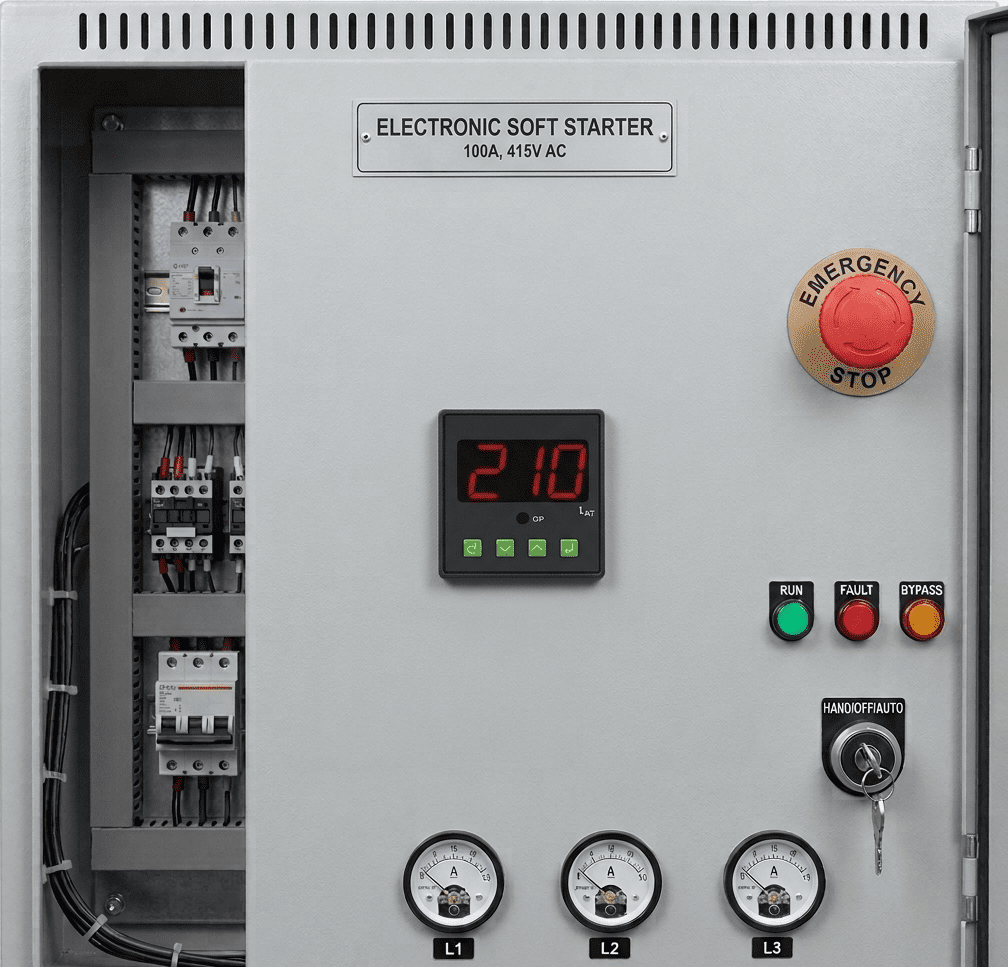
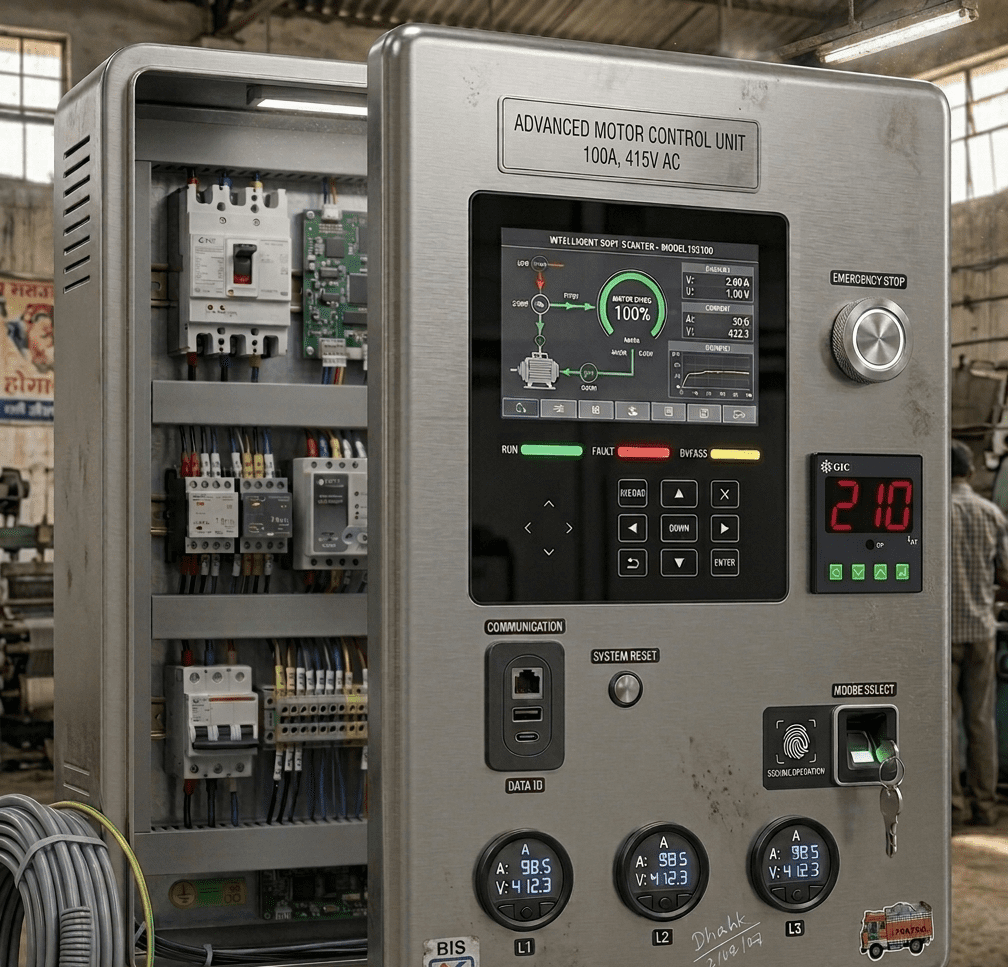
To control this, soft starter panels are used. These panels reduce inrush current using:
- Voltage control (thyristors in modern systems)
- Reactor coils (inductors) in series
The reactor coil provides inductance, which opposes sudden changes in current. As per the principle:
- V = L × (di/dt)
This means when current tries to rise suddenly, the inductor generates an opposing voltage and limits the rate of current increase.
At the same time, reactor coils generate heat during operation, making temperature monitoring essential.
Challenges
Solution
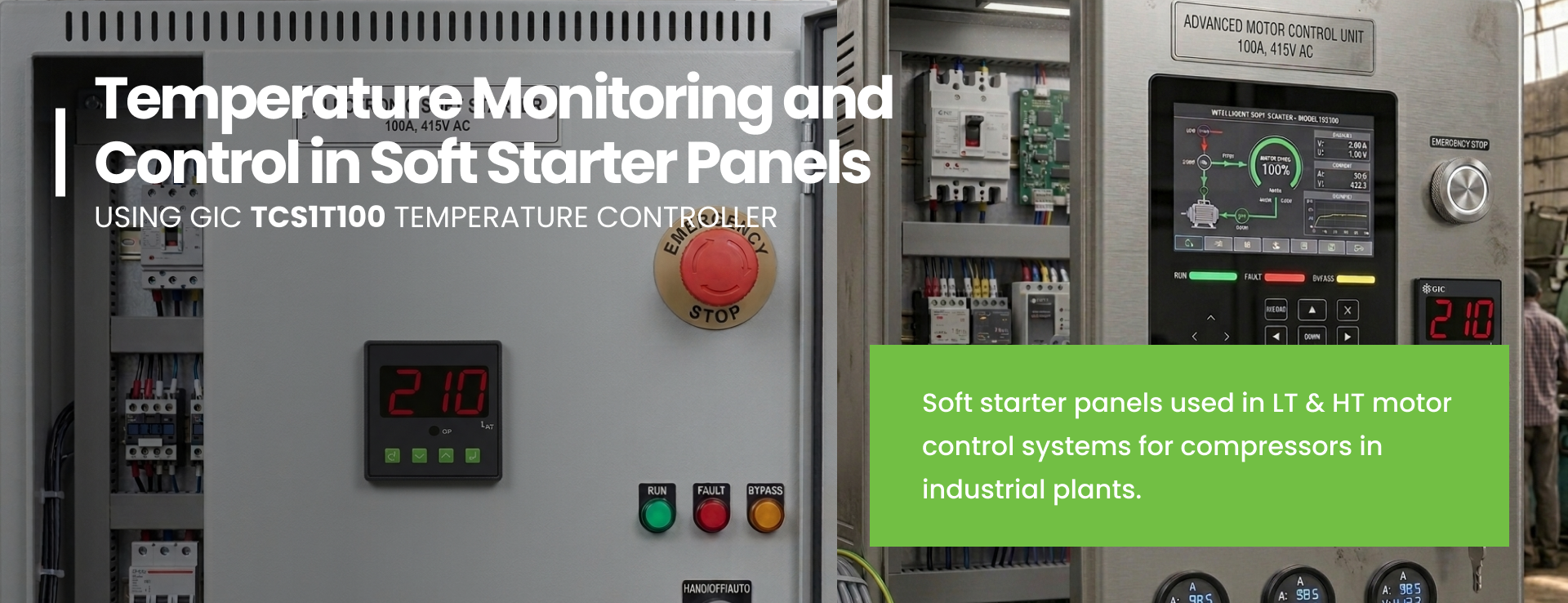
The GIC TCS1T100 temperature controller is used to monitor and control panel temperature.
Working:
- Temperature sensor placed near the reactor coil
- Controller continuously monitors temperature
- When temperature exceeds preset value:
- Cooling fan is automatically switched ON
- When temperature reduces:
- Fan switches OFF
Combined Benefit with Reactor Coil:
- Reactor coil → Limits inrush current using inductance
- TCS1T100 → Controls temperature caused by that inductive operation
Key Advantages:
- Controlled motor starting current
- Protection of reactor coils from overheating
- Improved reliability of soft starter panel
- Reduced maintenance and downtime
Conclusion
The combination of reactor coils and GIC TCS1T100 ensures both electrical and thermal protection in soft starter panels.
- Reactor coils smoothly limit inrush current
- Temperature controller prevents overheating
This results in:
✔ Safer compressor operation
✔ Longer equipment life
✔ Efficient and reliable panel performance