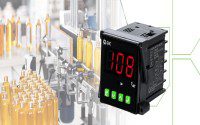
All industrial products, like temperature controllers, come with protection ratings that define how well they can withstand environmental conditions such as dust and water exposure. These ratings play a critical role in ensuring reliable performance, especially in demanding industrial environments.
An IP rating helps identify the level of protection provided by the device enclosure, which directly impacts durability and operational safety. Choosing the right rating ensures that the temperature controller continues to function accurately without being affected by external elements.
In this blog, you will understand what IP65 rating means, how it works, and why it is important in temperature controllers.
TL;DR
- IP65 temperature controllers are completely dust tight and protected against low pressure water jets, making them reliable for harsh industrial environments.
- They improve durability and stability by preventing dust ingress and protecting internal electronics from moisture, especially in cleaning and washdown conditions.
- IP65 is water resistant, not waterproof, so it is suitable for splashes and jets but not for immersion in water.
What is an IP rating?
IP ratings, or Ingress Protection ratings, define the level of protection an electrical device enclosure provides against solid particles such as dust and liquids such as water. These ratings are standardized and help determine how suitable a device is for different environmental conditions.
An IP rating is written as “IP” followed by two digits, where each digit represents a specific type of protection.
What do IP rating numbers represent?
The IP rating consists of two digits. The first digit represents protection against solid particles such as dust, and the second digit represents protection against liquids such as water.
First Digit: Protection Against Solid Particles
| First Digit | Level of Protection |
|---|---|
| 0 | No protection |
| 1 | Protection against objects larger than 50 mm |
| 2 | Protection against objects larger than 12 mm |
| 3 | Protection against objects larger than 2.5 mm |
| 4 | Protection against objects larger than 1 mm |
| 5 | Limited protection against dust, no harmful deposits |
| 6 | Complete protection against dust |
Second Digit: Protection Against Liquids
| Second Digit | Level of Protection |
|---|---|
| 0 | No protection |
| 1 | Protection against vertical water droplets |
| 2 | Protection against dripping water up to 15 degree tilt |
| 3 | Protection against spraying water up to 60 degrees |
| 4 | Protection against splashing water |
| 5 | Protection against low pressure water jets |
| 6 | Protection against powerful water jets |
| 7 | Protection against temporary immersion |
| 8 | Protection against continuous immersion |
| 9k | Protection against high pressure and high temperature water jets |
Why is IP65 Important in Temperature Controllers?
An IP65 rating ensures that a temperature controller operates reliably in environments where dust and water exposure are common. Protection against dust prevents internal component damage and maintains measurement accuracy.
Water jet protection ensures that the controller continues to function even in areas where cleaning or moisture exposure is frequent. This improves durability and reduces the risk of failure in industrial conditions.
IP65 also supports long-term performance by protecting internal electronics from contamination and external damage.
Applications of IP65-Rated Temperature Controllers
IP65 temperature controllers are used in environments where protection from dust and water is essential.
- Industrial manufacturing units with dust and debris
- Food and beverage processing areas with regular washdowns
- Chemical plants where exposure to moisture is common
- Outdoor installations exposed to weather conditions
- Packaging and plastic processing machines
- HVAC systems operating in humid environments
Is IP65 Waterproof or Water Resistant?
IP65 is water-resistant, not waterproof.
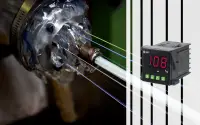
An IP65 rating ensures protection against low-pressure water jets from any direction, which means the device can handle splashes, cleaning processes, and exposure to moisture without damage.
However, IP65 does not support immersion in water. Continuous exposure to water or submersion can lead to failure since the enclosure is not sealed for that level of protection.
IP65 is suitable for environments with dust and water exposure, but not for applications where the device may be submerged.
What happens if IP65 is not used where needed?
Using a lower protection rating in harsh environments can lead to:
- dust accumulation inside controller
- incorrect temperature readings
- corrosion of internal components
- system failure or downtime
- reduced equipment lifespan
Conclusion
IP65 is a widely used protection standard in temperature controllers that ensures complete dust protection and resistance to water jets.
It improves durability, safety, and operational stability in industrial environments where equipment is exposed to dust and moisture. However, it is not suitable for underwater applications.