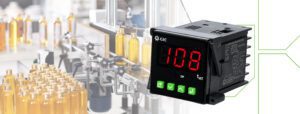
Ask any food processing floor manager what keeps them up at night, and reliable, repeatable output comes up first. Will this batch bake the same way the last one did? Will the pasteurizer hold its temperature for the full cycle? Will pouch number 4,000 match pouch number one?
A pasteurizer running two degrees warmer, a cooling tunnel reacting a few seconds late, a filling head drifting over a long shift, none of this looks dramatic in the moment, but it adds up: texture that’s slightly off, shorter shelf life, or a safety issue that surfaces only after the product has left the plant. Tighter manual monitoring helps, but it doesn’t fix the real problem, people get tired, shifts change, and even a skilled operator reacts slower than a machine built to react in milliseconds.
That’s the gap industrial automation fills. A setup built around a programmable logic controller (PLC), a PID temperature controller, an HMI panel, and the right monitoring devices reads the process the same way at 3 AM as at 3 PM, correcting small deviations before they become batch-level problems. This matters even more for plants sourcing equipment at scale, where a reliable PLC controller India-wide, or an HMI panel India-wide, has quietly become a baseline expectation rather than a premium feature.
Why uniform output is harder to hold onto than it looks
A processing line looks like a straight sequence on paper: mix, cook, cool, fill, seal, pack. A small wobble in step one rarely stays contained there. Temperature, pressure, timing, and ingredient ratios all need to sit within a narrow band, batch after batch, and manual control struggles with this because people aren’t identical to themselves from one shift to the next.
- Feeding, handling, and transfer steps can behave unpredictably the moment upstream output isn’t uniform
- Line changeovers between recipes or batch sizes open a window where manual adjustment is especially error-prone
- As lines run faster and more interconnected, a small disruption at one station ripples downstream faster than a person can react to it
Where automation earns its keep
The idea is simple: measure what matters, compare it to what it should be, and adjust before the gap shows up in the product. What makes it valuable is how reliably it’s executed, run after run.
- Sensors track temperature, pressure, and timing continuously, not at scheduled check intervals
- Setpoints are programmed once and followed identically, regardless of shift or operator
- Centralised recipe management applies the same parameters the same way across every batch and line
- Every reading gets logged automatically, creating a record useful for quality control and compliance
Getting temperature right: where PID control comes in
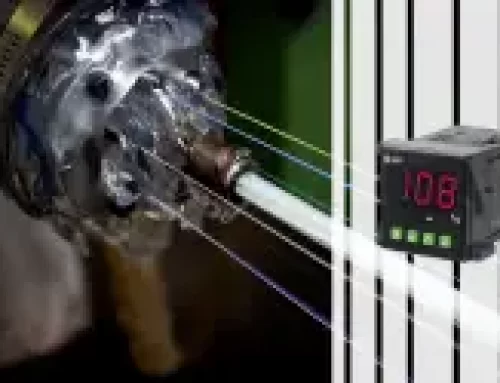
Temperature is usually the least forgiving variable on a food line, and this is where a PID temperature controller does most of its work. A PID (Proportional-Integral-Derivative) controller continuously compares actual temperature against the setpoint and adjusts output gradually, unlike a basic On/Off controller that simply switches the temperature element fully on or off. As an industrial temperature control system, this kind of digital temperature controller makes small, continuous corrections that keep the process stable rather than cycling between temperatures that are too high and too low.
In a tunnel oven, thermocouples across different temperature zones feed data back to the PID controller, letting a biscuit or snack product come out the same way batch after batch. Pasteurization needs a product held at a specific temperature for a specific duration, and PID keeps that hold steady; the same logic applies in reverse during refrigeration, where a stable temperature is what keeps a product fresh instead of spoiling early. An On/Off controller, by contrast, creates a repeating cycle of overshoot and undershoot, which is exactly why PID has become the default for temperature-sensitive processes.
Keeping the whole line in sync: the role of the PLC
A line also has to move product through mixing, filling, sealing, and packaging in the right order and at the right pace, and this is where a PLC controller does its job. A programmable logic controller decides whether the next stage can begin based on real-time feedback from the one before it, often integrating directly with PID algorithms so temperature control and sequencing work together rather than against each other.
Recipe parameters programmed into the PLC keep ingredient quantities and process order identical run after run. Paired with a touch screen PLC interface, operators get a clear industrial HMI display to monitor and adjust the process without walking the floor. For plants weighing a programmable logic controller price against the cost of uneven output and rework, automation tends to win out once those hidden costs are accounted for.
Watching the process as it happens: monitoring devices and food safety
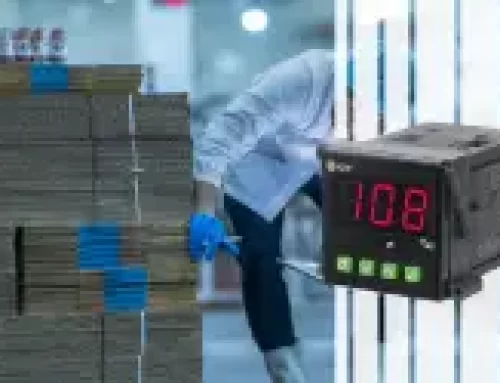
Reliable output and food safety are really the same goal seen from two angles. Industrial monitoring devices track critical parameters continuously and flag the moment a reading drifts outside its limit, so someone can act before an affected batch moves further down the line.
- An energy monitoring device can flag inefficient equipment cycles before they affect output quality or quietly drive up costs
- A voltage monitoring relay protects motors, temperature elements, and control panels from supply fluctuations that could disrupt a batch mid-run
- Data from an industrial monitoring system creates a timestamped record for every batch, useful for both internal review and external audit
Bringing it together
Reliable, repeatable output in food processing was never going to hold up through manual effort alone. Too many variables, temperature, timing, pressure, sequencing, need to sit within narrow limits at the same time, across every batch and shift.
What industrial automation offers, through a PID temperature controller, a PLC controller, an HMI panel, and an industrial monitoring system working together, is a way to measure these variables continuously and correct them before they reach the finished product. The result is a line where quality, safety, and output stay dependable, batch after batch.