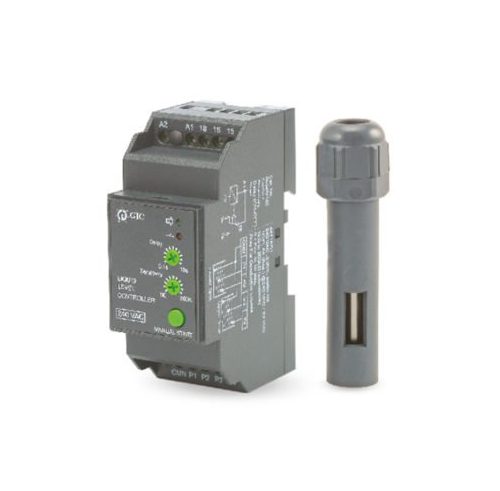
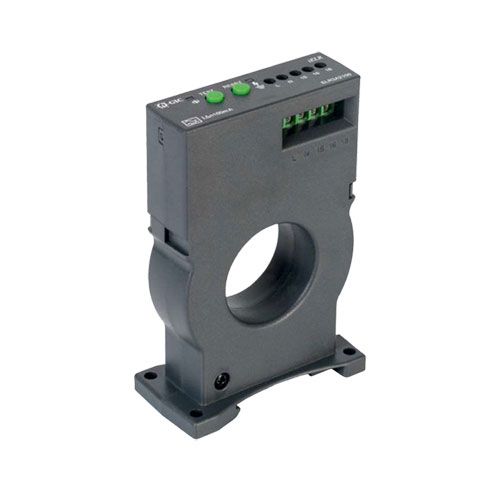
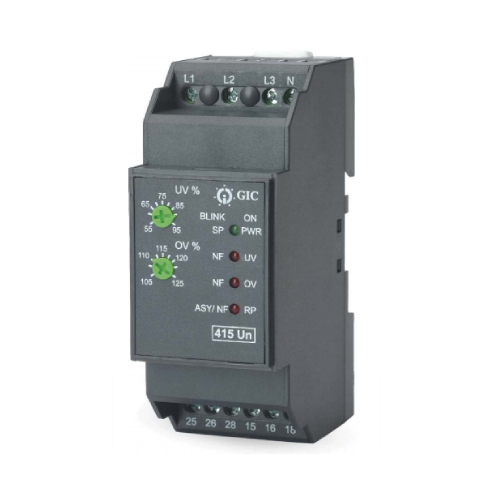
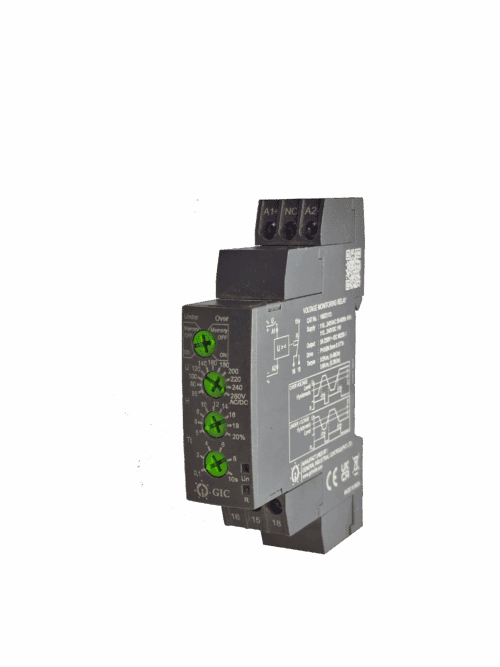
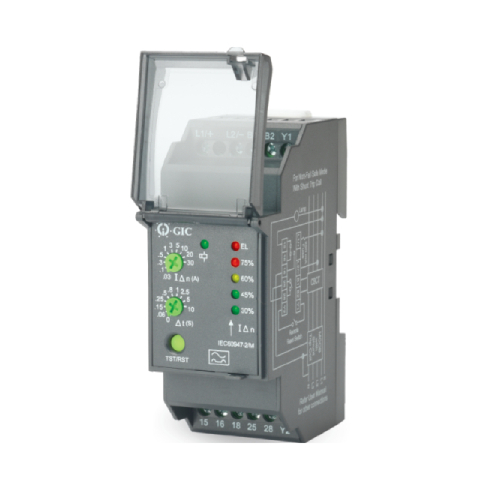
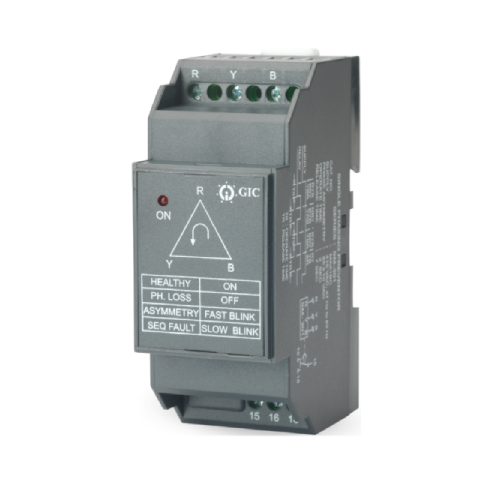
A Liquid Level Monitoring Relay (LLMR) is a control and protection device designed to monitor and regulate liquid levels in tanks, reservoirs, and pipelines. It detects high, low, or intermediate liquid levels and triggers pumps, alarms, or valves to maintain safe and efficient operation. These relays are essential in water treatment plants, pumping stations, industrial process systems, and HVAC applications, ensuring reliable automation of liquid handling processes.
Featured GIC Liquid Level Monitoring Relay Products
- LLMR-100 – Compact single-tank level monitoring relay with adjustable sensitivity.
- LLMR-200 – Multi-level relay for dual-tank and advanced process control.
- Accessories for LLMRs – Probes, mounting kits, and sockets for easy installation.
Key Benefits of Water Level Controller Relays
Reliable Level Detection
Accurately monitors high and low liquid levels, ensuring pumps and valves operate only when needed.
Prevents Dry Run & Overflow
Protects pumps from running without liquid and prevents tank overflow, reducing equipment damage and water wastage.
Easy Integration
Simple wiring, DIN-rail mounting, and adjustable sensitivity make installation and commissioning quick.
Versatile Applications
Suitable for conductive liquids like water, wastewater, and chemical solutions across industrial and commercial sectors.
Frequently Asked Questions
A Liquid Level Monitoring Relay is a device that senses liquid levels in tanks or pipelines and controls pumps, valves, or alarms to maintain safe operating levels.
- Uses probes or electrodes to detect liquid conductivity.
- Senses changes in resistance as liquid makes contact with probes.
- Activates or deactivates pumps/alarms based on programmed settings.
They automate liquid level management, prevent equipment failure, reduce water/energy wastage, and improve process safety.
GIC LLMRs are widely used in:
- Water treatment plants
- Wastewater management
- Pumping and irrigation systems
- Industrial process tanks
- Cooling and HVAC systems
They are suitable for conductive liquids such as water, wastewater, and some chemical solutions. For non-conductive liquids, specialized sensors are required.
Key considerations include:
- Number of levels to be monitored (high/low/multi-level)
- Sensitivity range (resistance in kΩ)
- Supply voltage compatibility
- Type of liquid (conductive or non-conductive)
- Installation environment