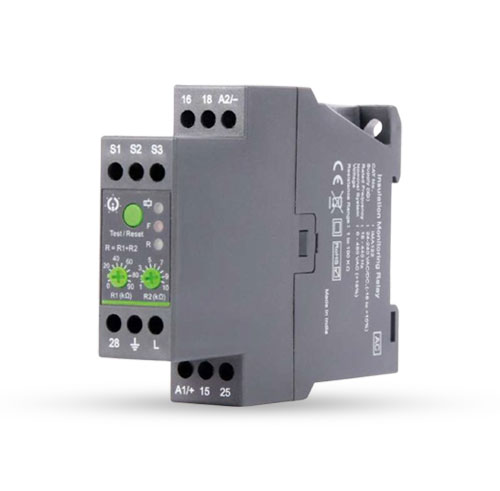
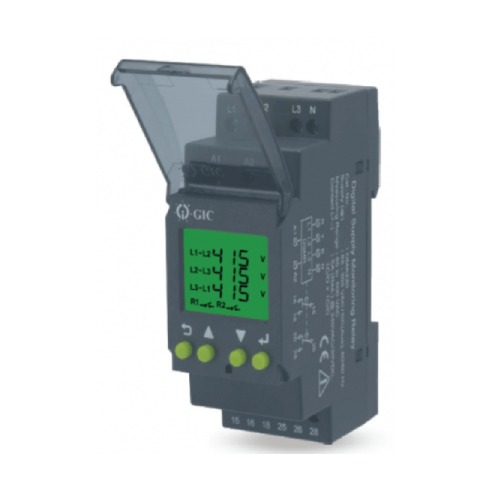
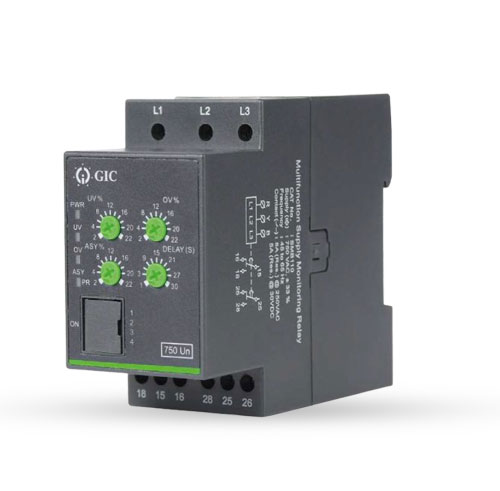
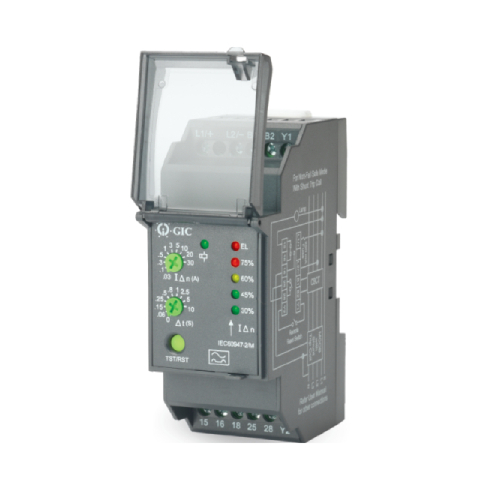
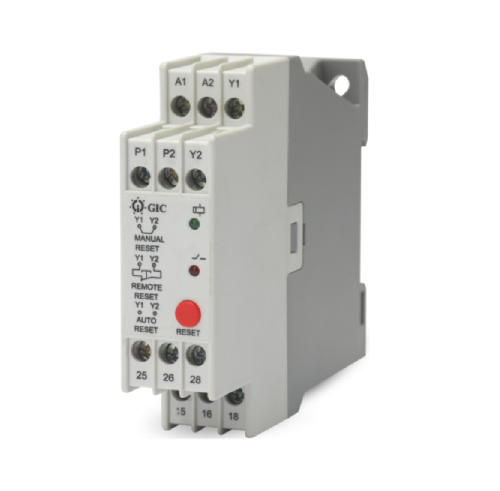
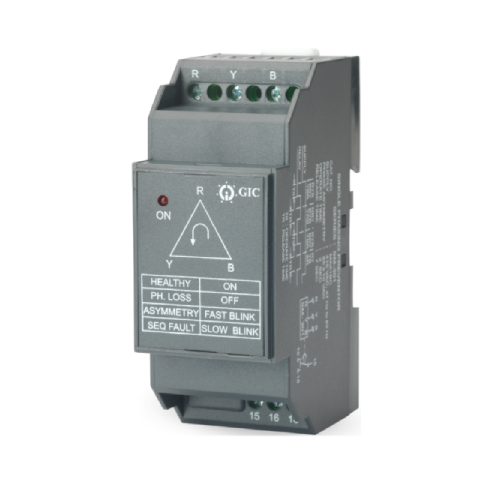
An Insulation Monitoring Relay (IMR) is a protective device used to monitor the insulation resistance of ungrounded (IT) power systems. It continuously measures insulation resistance between active conductors and earth, providing early detection of insulation faults. By alerting operators before a complete breakdown occurs, insulation monitoring relays help prevent electrical shocks, equipment failures, and costly downtime. They are essential in applications where continuous operation and high safety standards are critical.
Featured GIC Insulation Monitoring Relay Products
- IMR-100 – Compact insulation monitoring relay for low-voltage ungrounded systems.
- IMR-200 – Advanced relay with adjustable response settings for industrial networks.
- Accessories for IMRs – Mounting kits, communication modules, and connectors for seamless integration.
Key Benefits of Insulation Monitoring Relays
Continuous Fault Detection
IMRs provide real-time monitoring of insulation resistance, detecting faults early and ensuring safer electrical operation.
Enhanced Safety
By identifying insulation degradation before breakdown, IMRs reduce the risk of electric shock, fire, or equipment damage.
Increased Uptime
With preventive monitoring, operators can perform corrective maintenance before faults escalate, minimizing downtime.
Versatility
Suitable for diverse industries including healthcare, manufacturing, renewable energy, and critical infrastructure.
Frequently Asked Questions – Insulation Monitoring Relay
An IMR is a protective device that continuously monitors insulation resistance in ungrounded power systems, issuing alarms when resistance falls below a set threshold.
- Injects a small measuring voltage between the system and earth.
- Monitors insulation resistance in real time.
- Triggers an alarm or trip when resistance drops below the set value.
They prevent dangerous insulation breakdowns, protect sensitive equipment, and ensure compliance with electrical safety standards in ungrounded systems.
GIC IMRs are widely used in:
- Hospitals and medical facilities (IT power systems)
- Data centers and server rooms
- Renewable energy systems (solar & wind)
- Industrial automation plants
- Transportation (railways, ships, EV charging stations)
No. Insulation monitoring relays are explicitly designed for ungrounded IT systems. Grounded (TN/TT) systems require alternative protection devices.
Key considerations include:
- System voltage range
- Response time
- Alarm/tripping functions
- Communication interface (Modbus, RS485, etc.)
- Environmental and installation conditions