Application:
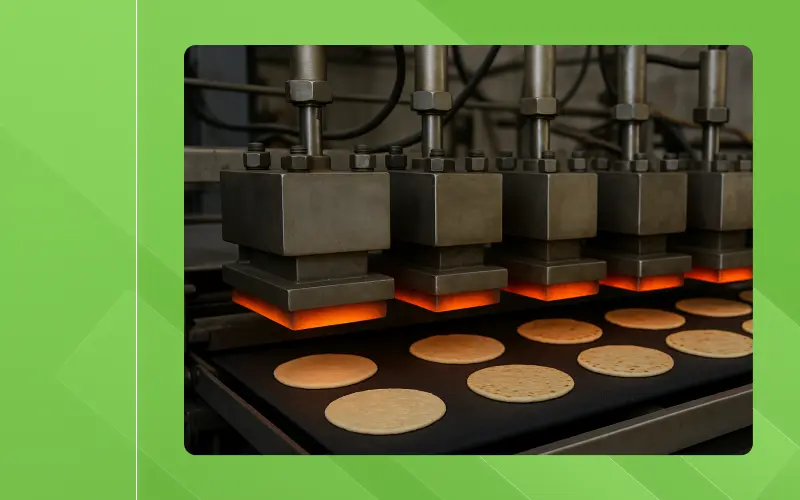
Heat Transfer Stage of Digital Sublimation Printing
Action:
GIC Temperature Controller installed to achieve accurate and stable temperature control throughout the process of the heat press.

Introduction
Digital Sublimation printing is an application where temperature is expected to be maintained very precisely for the process of transferring the ink onto the fabric effectively. A textile printing unit faced uneven print quality, the reason being the failure of precise temperature control during the heat press performance.
Challenges
Inconsistent temperature control during the heat transfer stage resulted in the textile company facing a series of problems:
- Incomplete ink absorption by the fabric.
- Prints came out uneven and blurred.
- Excessive wastage of ink and ink bleeding.
- High rejection rates were observed due to temperature fluctuations between cycles.
Solution
- Controller used:48x48mm TCS4T2A0.
- Installation: Integrated into the heat press control panel with sensor setup.
- Set Point: Configured based on optimal sublimation temperature
- Monitoring: Real-time temperature display for operator control
- PID with Auto-Tuning: Ensures consistent heating during long cycles
- Operator Interface: Simple user interface for easy adjustments by floor staff
Benefit to Customer
The GIC Temperature Controller’s installation produced a number of significant advantages:
- Improved Print Quality: Even, High-resolution, and accurate-color prints.
- Reduced Wastage: optimal usage of ink and lower Fabric rejection.
- Higher Efficiency: Runs the process over a long duration with the same precision.
- User-Friendly Operation: Daily usability is enhanced due to the user-friendly interface of the controller, making it easier for floor operators to operate temperature settings.
Conclusion
The textile company overcame a critical challenge by installing the GIC Temperature Controller into their sublimation printing machine. As a result, the business was observed to meet the market standards thanks to improved print quality, process efficiency, and a more dependable production setup.



 info@gicindia.com