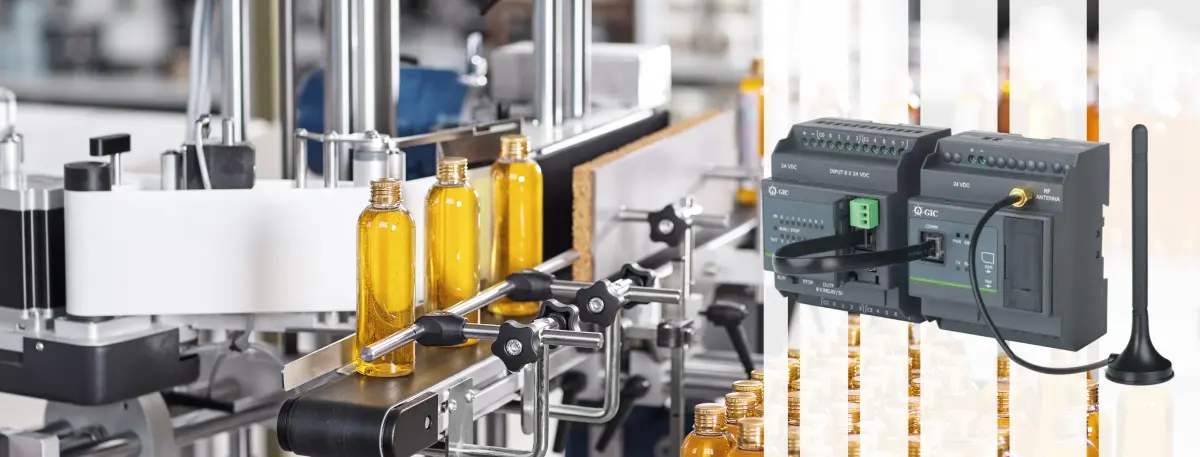
Human Machine Interface (HMI) connects operators with machines by displaying real-time process data, alarms, and control commands. A Programmable Logic Controller (PLC) executes automation logic by reading inputs, processing instructions, and activating outputs. Together, HMI and PLC form the core of industrial control systems.
But can an HMI operate without a PLC? Modern smart HMIs and embedded controllers handle logic directly and communicate with sensors and actuators using protocols like Modbus, Ethernet/IP, or Profinet.
In this article you will get to know HMI functions, PLC roles, and the conditions where HMIs can work independently.
TL;DR
-
HMIs can work without a PLC when using smart panels with embedded logic, allowing basic monitoring, control, and direct communication with sensors and actuators.
-
Standalone HMIs suit simple operations, but they cannot handle complex sequences, high speed processes, multi device coordination, or advanced automation tasks.
-
For full scale industrial control, a PLC is still essential because it delivers real time processing, reliability, safety, and scalable automation across multiple machines.
Can HMI Work Without PLC?
Yes, an HMI (Human-Machine Interface) can operate without a PLC (Programmable Logic Controller), but this depends on the control requirements. Standalone HMIs connect directly to sensors, actuators, and other control devices, enabling basic monitoring and equipment operation without a PLC.
In industrial environments, HMIs usually pair with PLCs. The PLC executes control logic, manages inputs and outputs, and ensures real-time process accuracy. The HMI provides a user-friendly interface for operators to monitor, visualize, and adjust system parameters.
Modern smart HMIs and embedded controllers now integrate limited control logic, allowing them to function independently or with alternative controllers. While standalone HMIs handle simple tasks efficiently, complex automation still requires PLCs for precise control, safety, and coordination across multiple devices.
Read more: How do HMI and PLC interface each other?
When Can HMI Work Independently
In certain scenarios, a human-machine interface (HMI) can function as a standalone controller, managing machines or processes without a PLC. These smart panels suit smaller or simpler operations where complex automation is unnecessary. Modern interfaces often include embedded logic, enabling basic control, monitoring, and device communication.
- Simple Control Tasks: Standalone panels handle basic monitoring, single-machine control, and small equipment operations.
- Embedded Logic: Smart interfaces execute limited automation logic independently.
- Direct Device Communication: Panels connect directly to sensors, actuators, and control elements using Modbus, Ethernet/IP, or Profinet.
- Reduced Wiring and Setup: Eliminating the PLC layer simplifies installation for small systems.
- Cost Efficiency: Standalone setups reduce hardware and maintenance costs.
- Real-Time Monitoring: Interfaces display process data, alarms, and performance logs.
- Limited Complexity: Effective only for single-step or small-scale operations.
HMI-PLC Communication Alternatives
Modern automation systems rely on protocols to connect HMIs, PLCs, and field devices, enabling real-time monitoring and control.
- Modbus: Allows interfaces to read sensor data and control actuators directly. Best for simple point-to-point or small networks, but limited for complex systems.
- Ethernet/IP: Provides high-speed, real-time communication between panels, controllers, and I/O devices. Supports scalable networks but requires detailed configuration.
- Profibus: Ensures deterministic, reliable communication for process automation. Offers high-speed coordination but involves higher setup complexity.
Direct HMI-to-Device Communication: Standalone panels or smart HMIs can use these protocols to communicate directly with sensors, actuators, and other devices. This enables basic control, alarms, monitoring, and limited automation without a PLC.
Limitations:
- Flexibility: Direct protocol control cannot handle multi-step sequences or complex machine coordination.
- Scalability: Expanding devices or operations may exceed standalone panel capabilities.
- Maintenance: Errors in a PLC-free network propagate easily, making troubleshooting and updates more challenging.
Read more: What is human-machine interface (HMI) and how does it work?
What are the Limitations of HMI Without PLC?
- Complex Control: Standalone HMIs cannot manage multi-step sequences, multi-axis motion, PID loops, or safety-critical processes.
- High-Speed Operations: HMIs lack real-time processing power needed for fast automation tasks.
- Scalability: Adding more machines or devices exceeds the capacity of standalone HMIs.
- Advanced Features: Predictive maintenance, automated decision-making, and real-time analytics require PLC capabilities.
Conclusion
Standalone HMIs manage simple monitoring, basic machines, alerts, and data logging using protocols like Modbus, Ethernet/IP, or Profibus. For complex automation, multi-device coordination, and advanced analytics, PLC integration is essential. HMI-PLC systems ensure scalability, reliability, and precise control.
In short, standalone HMIs offer simplicity and cost efficiency, while HMI-PLC setups deliver full performance for larger or more complex operations.
 info@gicindia.com