
PTC Thermistor Motor Protection Relay for Reliable Overtemperature Safety
A PTC Thermistor Relay is a protective device designed to safeguard electric motors, transformers, and other equipment against overheating. It works in combination with Positive Temperature Coefficient (PTC) thermistors, which sense rising temperatures in windings or components. When the preset threshold is reached, the relay triggers protective measures such as shutting down the motor or activating alarms. This ensures reliable protection, extended equipment lifespan, and enhanced operational safety in industrial and commercial applications.
Supply Voltage +
Mode +
Mounting +
Relay +
No. Of Programs +
Display +
Power Reserve +
Clock Accuracy +
Pre-Programmed +
Accessories +
Product visibility +
Analog Input +
Base/Ext +
Bazel type +
Center Distance +
Clock +
Control Action +
Display with & without +
Input/Output +
No. of digits +
No. of set points +
Output +
Output 1 +
Output 2 +
Output 3 +
Product Type +
Read Out +
Register +
RS485 Communication +
Sensor Input +
Size +
Termination +
Contact +
Delay +
Enclosure Design +
Function +
Input Voltage +
Output Current +
Output Voltage +
Power +
Relay Output +
Supply +
Timing Range +
Variant +
Alarm Output +
Analog Output +
Auto Reset time +
Auxiliary Supply +
CBCT Size +
Colour +
Current Range +
Digital Display +
Digital Input +
Digital Output +
Display Colour +
High Speed Inputs +
Input Signal +
LCD Display +
Leakage Current +
Module +
Neutral Loss +
Output Signal +
Over Frequency +
Over Voltage +
Phase Asymmetry +
Phase Loss +
Phase Sequence +
Reset +
Sensor Supply +
Series +
Settable Off Delay +
Settable On Delay +
System +
Transistor Output +
Under Frequency +
Under Voltage +
Voltage +

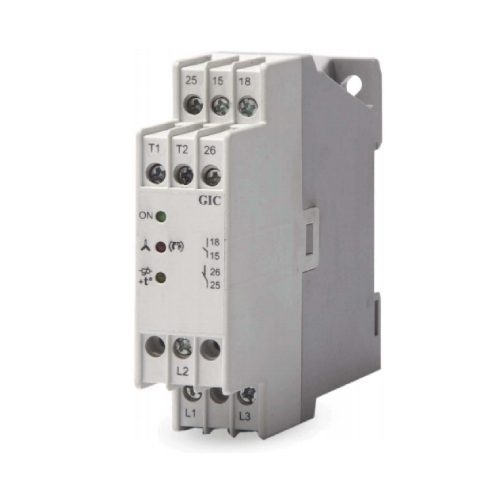
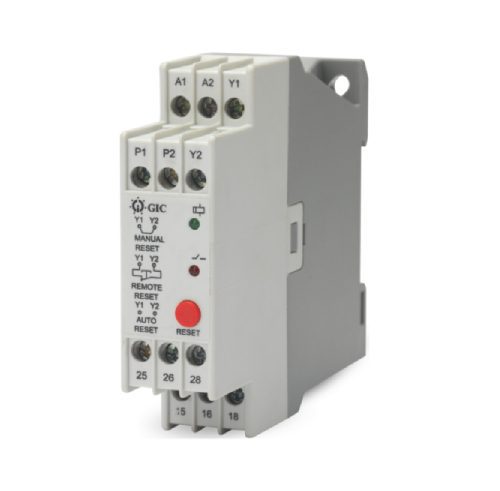
Features of GIC PTC Thermistor Relay Products
- PTC Thermistor Relay TR-100 – Compact motor protection relay with adjustable trip points.
- PTC Relay TR-200 – Multi-channel relay designed for larger machines and advanced safety needs.
- Accessories for PTC Relays – Expansion modules, sockets, and mounting kits for seamless installation.
Key Benefits of PTC Thermistor Motor Protection Relay
Reliable Overheating Protection
PTC relays continuously monitor motor winding temperatures, ensuring automatic shutdown during thermal overloads to prevent damage.
Extended Equipment Life
By preventing overheating and insulation breakdown, PTC relays significantly increase the operational lifespan of motors and machinery.
Simple & Cost-Effective
Easy to install and integrate, PTC relays reduce maintenance costs and downtime while offering a low-cost thermal protection solution.
Wide Application Range
From small motors to heavy-duty equipment, PTC relays are scalable and adaptable for diverse industrial environments.
 info@gicindia.com