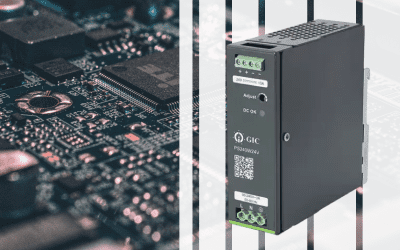
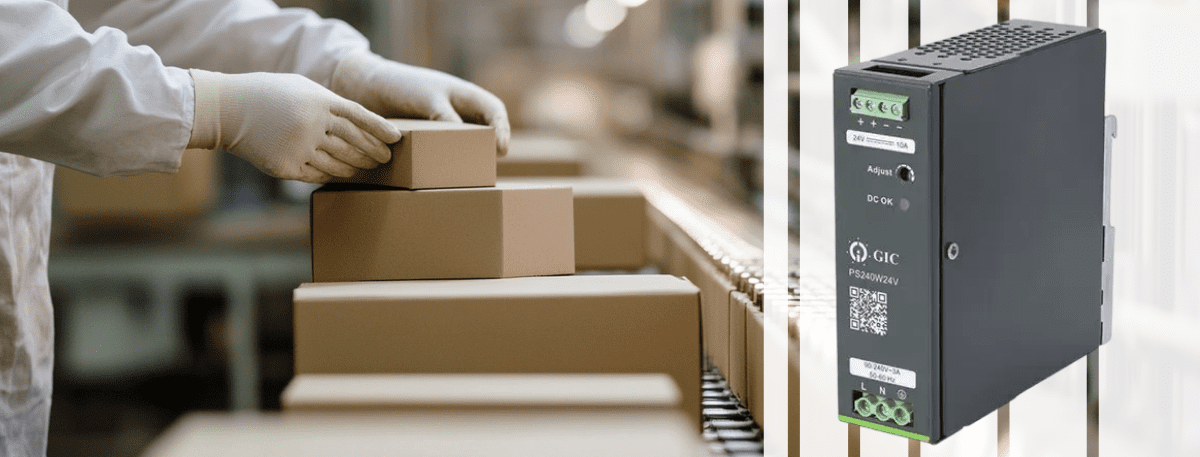
Industrial automation systems, PLCs, and control panels rely on consistent power delivery, but many engineers face failures due to incorrect or inefficient DIN Rail Switching Mode Power Supplies (SMPS).
Using an underpowered or incompatible SMPS can cause frequent system downtime, energy loss, equipment damage, and safety risks. Certifications, efficiency ratings, and environmental resilience are often overlooked, leading to costly maintenance and unreliable operations.
Choosing the right DIN Rail SMPS with proper power ratings, input voltage compatibility, safety certifications (UL, CE, RoHS), efficiency, and protective features ensures stable performance, energy savings, and long-term reliability for industrial and commercial applications.
In this blog, you will get to know how to choose the right DIN Rail Switching Mode Power Supply.
TL;DR
10 Key Factors to Choose the Right DIN Rail SMPS
Selecting the correct DIN Rail Switching Mode Power Supply (SMPS) is critical for industrial automation, control panels, PLCs, motor drives, and factory sensors. Focus on these essential factors:
Power Output and Voltage Requirements
- Ensure input voltage matches the facility: single-phase AC, three-phase AC, or DC systems.
- Select output voltage and current to match industrial equipment, commonly 12V, 24V, or 48V DC.
- Choose a power rating that handles peak industrial loads with a safety margin.
- If multiple units operate together, verify parallel operation support.
Harsh Environment Compatibility
- Verify operating temperature range for factory floors or machine rooms.
- Look for dust, moisture, vibration, and shock protection.
- IP-rated and rugged casings ensure long-term durability in industrial conditions.
Installation and Space Considerations
- Check dimensions to fit control cabinets and panel layouts.
- Ensure sufficient clearance for ventilation and heat dissipation.
- Flexible mounting options (DIN rail or wall) simplify industrial integration.
Compliance and Safety Certifications
- Verify UL, CE, and IEC compliance for industrial safety.
- Specialized standards may apply: ATEX (hazardous zones), EN 50155 (railway), or IEC 60601-1 (medical-industrial equipment).
- Confirm protection against power surges and electromagnetic interference (EMC).
Efficiency and Thermal Management
- High-efficiency SMPS (85–95%) reduce energy loss and heat buildup.
- Fanless or convection-cooled units improve reliability and reduce maintenance.
- Internal heat management protects sensitive industrial components.
Advanced Features for Industrial Control
- DC-OK relay for system diagnostics.
- Communication interfaces (IO-Link, Modbus) for automation networks.
- Remote monitoring, hot-swap, and fault detection enhance uptime.
Redundancy and Backup Power
- Redundancy modules maintain power if a unit fails.
- UPS and buffer modules handle outages and voltage fluctuations.
- Protection modules safeguard industrial equipment from surges and spikes.
How to Choose the Right DIN Rail SMPS for Your Industrial Application?
To select the right DIN rail SMPS, start by identifying the power needs of your equipment, including the required input range and the exact output rating. Check the operating environment to ensure the supply can handle heat, vibration, or dust. Make sure the model fits your panel layout and complies with industry approvals such as CE or UL, and always choose one that offers core protections like overload and short-circuit safety. Here’s the step by step procedure:
Check Your Power Needs
- Add up the total power your machines and devices need.
- Include a safety margin for future expansions and peak loads.
Consider the Environment
- Look at temperature, humidity, vibration, and other stresses in the facility.
- Choose units with dust, moisture, and shock protection for tougher conditions.
Plan for Space and Installation
- Make sure the SMPS fits inside your control cabinet.
- Leave room for airflow to keep it cool.
- Look for units that can mount on a DIN rail or on a wall if needed.
Confirm Safety and Compliance
- Check for UL, CE, and IEC certifications.
- For specialized industrial use, consider ATEX, EN 50155, or IEC 60601-1 compliance.
- Ensure it can handle power surges and electromagnetic interference.
Focus on Efficiency and Reliability
- High-efficiency models reduce heat and save energy.
- Fanless units often last longer and need less maintenance.
Look at Extra Features
- Features like DC-OK relay, remote monitoring, or communication interfaces (Modbus, IO-Link) help with diagnostics and uptime.
Plan for Backup Power
- For critical operations, use redundant units or a UPS.
- Buffer and protection modules help protect equipment from surges and voltage drops.
Conclusion
Choosing the right DIN Rail Switching Mode Power Supply is critical for ensuring reliable, efficient, and safe industrial operations. By carefully assessing power requirements, environmental conditions, physical dimensions, and compliance certifications, engineers can prevent downtime, protect equipment, and optimize energy use. High-efficiency units with advanced features, monitoring capabilities, and backup options further enhance system reliability and longevity. Whether for small-scale setups or complex industrial automation, selecting the appropriate SMPS ensures consistent performance and long-term operational success.
 info@gicindia.com