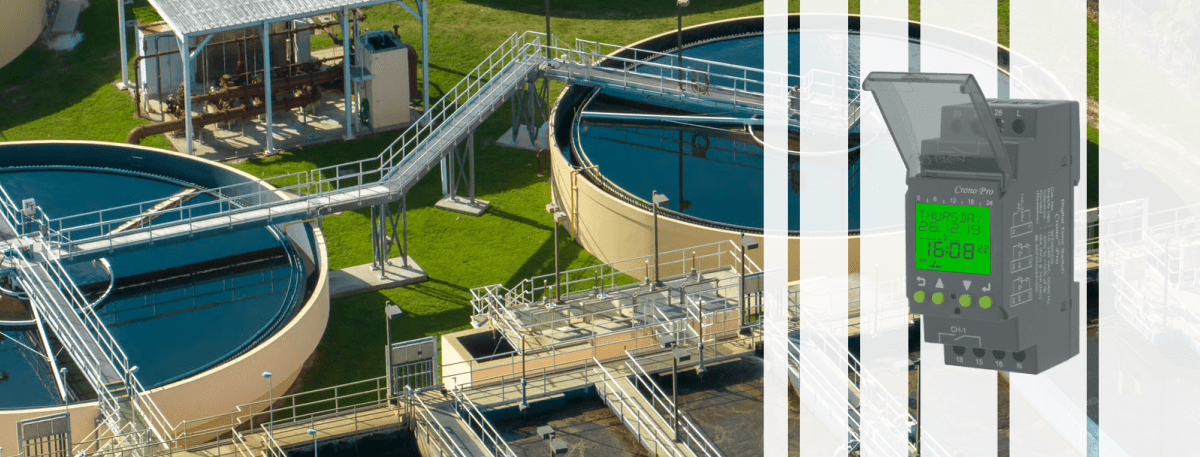
A time switch controls electrical circuits according to a preset schedule. It turns lights, motors, and machines on or off at specific times to improve energy efficiency and reduce manual effort. Industries use time switches to automate lighting systems, water pumps, and production equipment.
In this blog, you will learn:
- The main types of time switches used in industrial automation
- Their functions and working mechanisms
- Applications and benefits across different industrial systems
- How to choose the right time switch for your operational needs
TL;DR
- The three main types of time switches are mechanical, digital, and astronomical, each using a different control method and suited for specific industrial timing needs.
- Mechanical switches are simple and durable for repetitive tasks, digital switches offer precise and flexible multi program scheduling, and astronomical switches auto adjust based on sunrise and sunset for outdoor and energy efficient control.
- Choosing the right time switch depends on schedule complexity, precision required, operating environment, and need for battery backup or seasonal adjustment.
What are the Different Types of Time Switches?
The main types of time switches are mechanical, digital, and astronomical. Each operates through a distinct mechanism and offers unique advantages in industrial automation.
1. Analog Time Switches
Analog time switches operate using a synchronous motor or spring-driven dial. The dial rotates continuously like the hands of a clock, engaging or disengaging switching contacts at preset intervals.
Advantages:
Mechanical switches are highly reliable in industrial environments with voltage fluctuations or electromagnetic interference. They provide consistent timing for repetitive processes, such as conveyor belts, water pumping schedules, or factory lighting cycles. Because they are purely mechanical, they do not require batteries or microcontrollers, making them easy to maintain and durable over long periods.
GIC’s Analog Time Switch features:
- Analog time switches, such as GIC’s analog time switch, operate through a spring or rotating dial mechanism that activates circuits at preset intervals.
- Daily or weekly schedules can be programmed easily, while the inbuilt override allows manual control whenever required.
- With high switching capacity, tamper-proof sealing, and modular construction, these timers provide reliable operation for industrial lighting, motors, and pumps.
- Once set, mechanical time switches maintain consistent performance with minimal maintenance, ensuring smooth industrial operations.
Read more: What Is an Analog Time Switch?
2. Digital Time Switches
Digital time switches use microcontroller-based circuits to store and execute multiple timing programs. Users can configure on/off cycles with minute-level precision, creating schedules that adapt to operational demands. Functionally, these are electronic time controllers that replace analog dials with programmable logic, allowing precise time control for complex industrial equipment.
Digital switches provide high flexibility, supporting multiple programs for motors, pumps, and automation devices. They include battery backup to maintain schedules during power outages, allow weekly or daily program customization, and can integrate with other industrial automation systems.
GIC’s Digital Time Switch features:
- Digital time switches, like GIC’s digital time switch, use microcontroller-based circuits for precise scheduling and automated control of industrial loads.
- They allow daily, weekly, and pulse programming, support 25 ON/OFF programs, and offer weekend exclusions or weekly OFF settings.
- LED indicators display relay status, 12/24-hour formats ensure clear timing, and a 6-year battery reserve maintains schedules during power interruptions.
- Manual override, keypad lock, and DST adjustment provide operational security and flexibility. Once programmed, these timers manage machinery, pumps, and lighting automatically, reducing manual intervention.
3. Astronomical Time Switches
Astronomical twilight switches calculate switching times based on sunrise and sunset at a specific geographic location. They adjust automatically throughout the year, controlling circuits such as outdoor lighting, security systems, and perimeter alarms.
Advantages:
Astronomical time switches remove the need for manual reprogramming due to seasonal changes, save energy, and ensure consistent operation of industrial and facility systems. These switches are ideal for factories, warehouses, and industrial perimeters requiring precise, energy-efficient lighting schedules.
GIC’s Astronomical Twilight Switch features:
- Astronomical time controllers, such as GIC’s astronomical time switch, automatically calculate sunrise and sunset times based on geographic coordinates, adjusting schedules throughout the year.
- Astronomical twilight switches support daily, weekly, astro, pulse, or cyclic programs, up to 50 ON/OFF cycles and 10 holiday schedules, and allow precise latitude/longitude input with time zone adjustments.
- Dual relay outputs, LCD display with backlight, manual override, password protection, and load/service hour tracking make them ideal for industrial outdoor lighting and energy management.
- Once set, astronomical time switch maintain perfect synchronization with daylight patterns, eliminating seasonal adjustments and ensuring energy-efficient operation year-round.
Read more: What is a Time Switch? Types and Applications Explained
Comparison of Time Switch Types
| Feature | Analog time switch | Digital time switch | Astronomical time switch |
|---|---|---|---|
| Programming / Control | Manual dial or pins; rotates continuously to activate contacts at preset times | Digital interface with programmable schedules, multiple on/off cycles | Location-based programming; calculates sunrise and sunset automatically |
| Flexibility | Limited to 24-hour cycles; fixed intervals | High flexibility; supports multiple programs per day or week | Adjusts automatically for seasonal changes; ideal for outdoor lighting |
| Precision | ±15 minutes; suitable for general industrial schedules | ±1 minute; precise control for machinery and process automation | ±1 minute; reliable for lighting control aligned with natural cycles |
| Power Backup | Power backup is available | Battery-backed to retain programs during power outages | Battery-supported to maintain timing and location data |
| Best For / Applications | Repetitive industrial operations such as conveyor belts, motor control, and basic lighting | Complex industrial schedules, pumps, and automation requiring precise timing | Outdoor lighting, industrial perimeters, and applications requiring seasonal adjustment |
How to Choose the Right Time Switch?
To select the right time switch for industrial systems, consider the following factors:
- Operational Requirements
-
-
- Mechanical: Repetitive operations like motors, pumps, basic lighting
- Digital: Complex schedules, multiple programs, integration with automation
- Astronomical: Outdoor lighting, industrial perimeters, seasonal adjustments
-
- Flexibility and Programming
-
-
- Mechanical: Fixed 24-hour cycles
- Digital: Multiple daily or weekly programs
- Astronomical: Automatically adjusts to sunrise and sunset
-
- Power Backup and Reliability
-
-
- Mechanical: Power backup is available, simple and durable
- Digital: Battery-backed for uninterrupted operation
- Astronomical: Battery-supported, maintains schedules during outages
-
- Application Environment
-
-
- Mechanical: Resistant to voltage fluctuations and electromagnetic interference
- Digital: Suitable for controlled industrial settings
- Astronomical: Designed for outdoor exposure and energy-efficient lighting
-
Conclusion
Time switches are essential tools for industrial automation, providing reliable time control for lighting systems, motors, pumps, and production equipment. Choosing the right type depends on the operational requirements and level of precision needed.
Mechanical time switches offer durability and simplicity for repetitive industrial processes, while digital time switches provide high flexibility, precise scheduling, and programmable automation for complex machinery. Astronomical time switches excel in outdoor and perimeter applications by automatically adjusting schedules based on sunrise and sunset, ensuring energy-efficient operation throughout the year.
By understanding the mechanisms, advantages, and applications of each type, industrial operators can select the optimal time switch to enhance productivity, reduce manual intervention, and maintain consistent operation across all systems.

 info@gicindia.com